
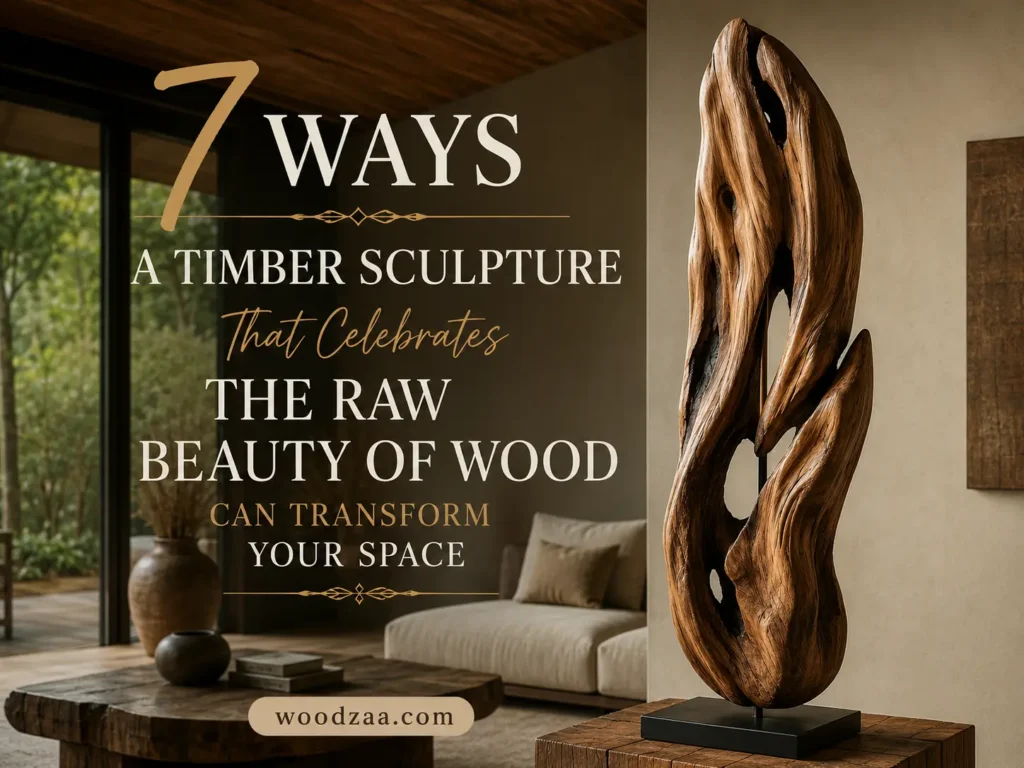
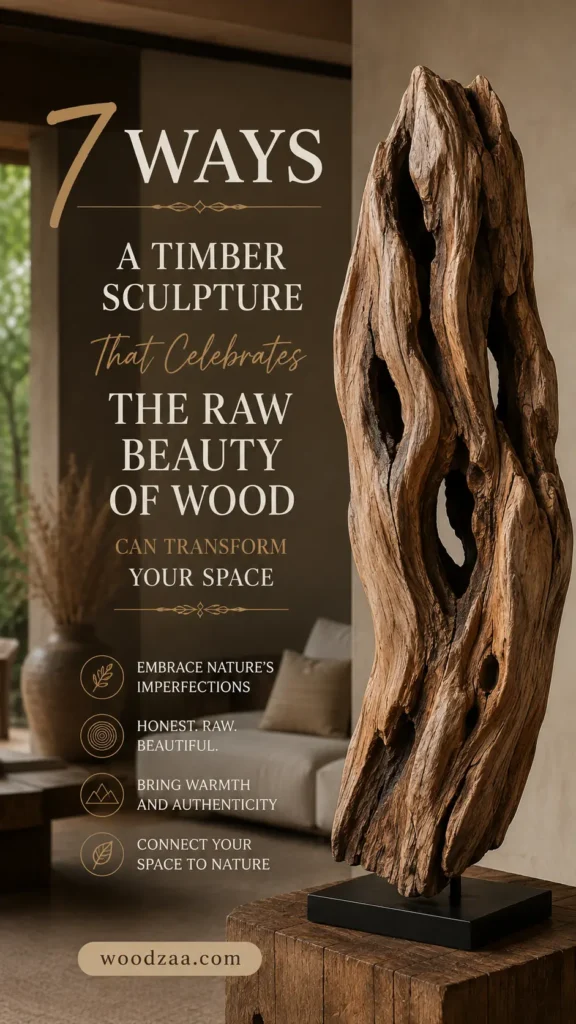
You’ve seen countless wooden objects polished, painted, and perfected until they barely resemble the tree they came from. The grain is hidden, the knots are filled, and the natural character is smoothed away. But what if the most beautiful wood art isn’t the one that’s been perfected, but the one that embraces its imperfections? What if true beauty lies in the cracks, the knots, the uneven grain – the very things that make each piece of wood unique? That’s the philosophy behind a timber sculpture that celebrates the raw beauty of wood.
In this guide, you’ll discover why raw, unpolished wood is having a moment in contemporary interiors. You’ll explore wabi-sabi wood sculpture that finds beauty in imperfection, organic natural timber art that honours the tree’s original form, honest material wood carving that lets the wood speak for itself, minimalist raw-edge sculpture that celebrates natural contours, unfinished wood aesthetic decor for authentic interiors, natural state hardwood art that showcases the material’s true character, rustic contemporary timber piece that bridges tradition and modernity, grain-celebrating sculptural wood that highlights nature’s patterns, imperfection-accepting wood art that embraces flaws, and pure organic timber forms that connect us to the earth.
These pieces aren’t just decor – they’re a celebration of wood in its most honest, unfiltered state.
1. Wabi-Sabi Wood Sculpture – Finding Beauty in Imperfection
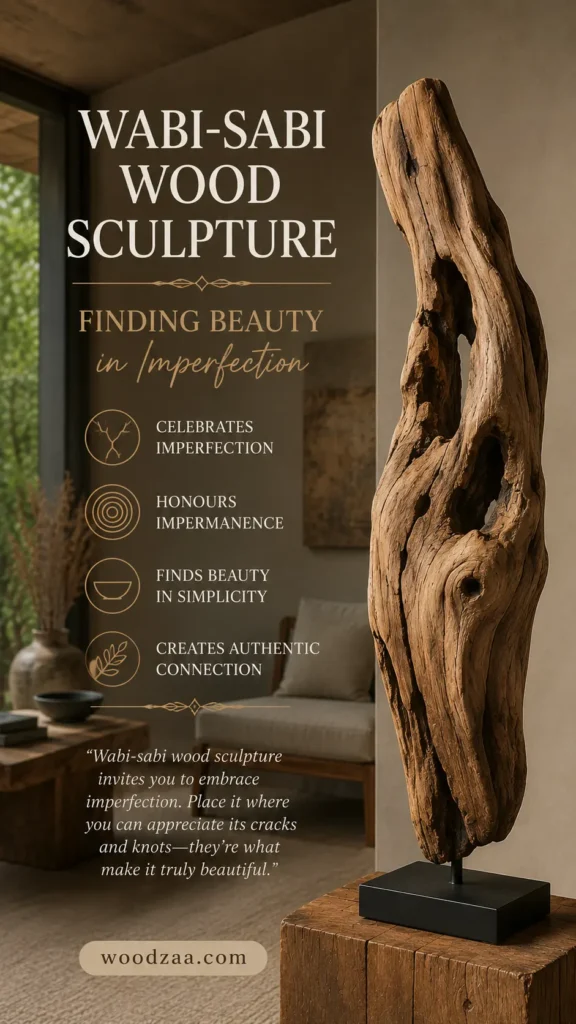
Wabi-sabi wood sculpture is rooted in the ancient Japanese philosophy that finds beauty in imperfection, impermanence, and incompleteness. In a world obsessed with perfection, wabi-sabi offers a refreshing alternative – a celebration of the cracks, the knots, the uneven surfaces that make each piece of wood unique.
What makes wabi-sabi wood sculpture so powerful:
- Celebrates imperfection: Cracks, knots, and uneven surfaces are features, not flaws
- Honours impermanence: The wood’s natural aging process is embraced
- Finds beauty in simplicity: Unadorned forms speak with quiet power
- Creates authentic connection: The piece feels honest and grounded
Japanese sculptor Yoshitoshi Kanemaki, for example, carves hyperreal human forms from solid camphor wood, allowing the veins and imperfections of the wood to remain exposed – a powerful embodiment of wabi-sabi. Similarly, artists like those at Forest Tales create contemporary hand-carved pieces infused with the Japanese aesthetic of wabi-sabi.
Worthy tip: “Wabi-sabi wood sculpture invites you to embrace imperfection. Place it where you can appreciate its cracks and knots – they’re what make it truly beautiful.”
For more on the philosophy behind organic design, check out our related article: 10 Natural Sculpture Design Ideas Inspired by the Outdoors (Mid to High Net Worth)
2. Organic Natural Timber Art – Honouring the Tree’s Original Form
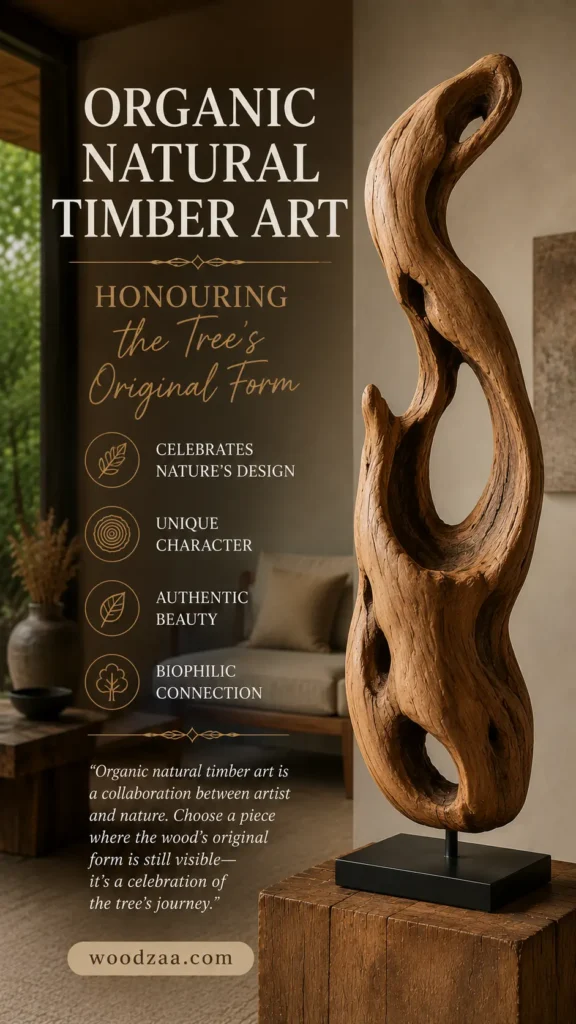
Organic natural timber art celebrates the tree in its most authentic state. Rather than imposing a rigid form on the wood, the artist works with the material’s natural curves, contours, and character – allowing the tree’s original shape to guide the final piece.
Why organic natural timber art captivates:
- Celebrates nature’s design: The tree’s original form is honoured
- Unique character: No two pieces are alike
- Authentic beauty: The material speaks for itself
- Biophilic connection: The organic forms connect us to nature
The “Still Stand Abstract Wood Sculpture” by Logniture is hand-carved from a single block of solid hardwood, with rounded forms that bring a touch of nature’s artistry into the home. The artist works with the wood, allowing its natural logic to guide the final expression.
Worthy tip: “Organic natural timber art is a collaboration between artist and nature. Choose a piece where the wood’s original form is still visible – it’s a celebration of the tree’s journey.”
You Might Like : 15 Stunning Wooden Necklace and Ring Ideas That Bring Natural Beauty to Your Style
3. Honest Material Wood Carving – Letting the Wood Speak
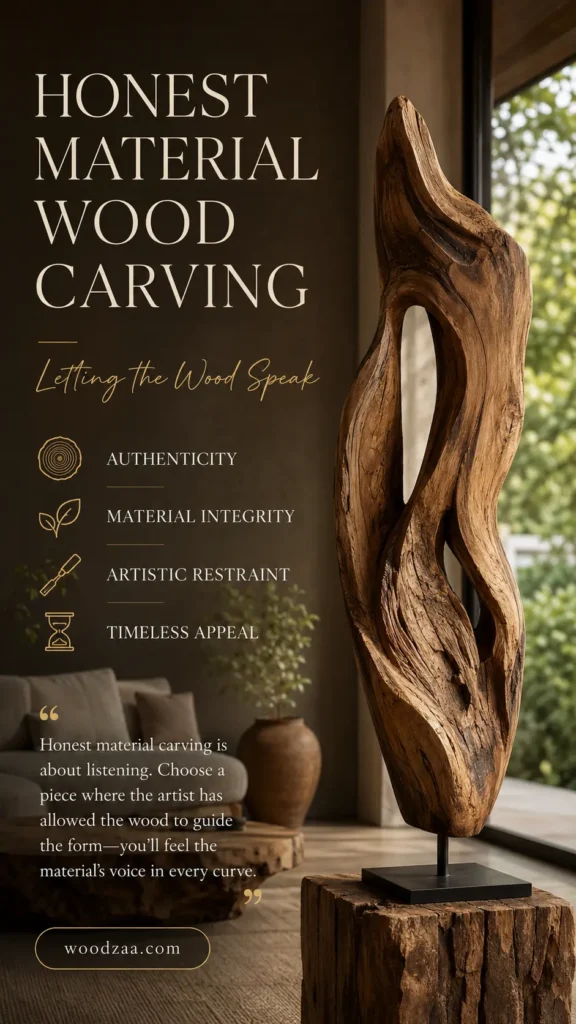
Honest material wood carving is about letting the wood speak for itself. The artist’s role is not to impose their will on the material, but to reveal what’s already there – the grain, the texture, the natural beauty that’s been waiting to emerge.
What makes honest material carving so special:
- Authenticity: The piece feels genuine and unpretentious
- Material integrity: The wood’s natural properties are celebrated
- Artistic restraint: The artist knows when to stop
- Timeless appeal: Honest materials never go out of style
French sculptor Thierry Martenon employs the technique of direct carving, allowing the raw beauty of the wood to guide his creative process. His minimalist approach results in pieces of remarkable purity, where every curve and line enhances the wood’s natural essence.
Worthy tip: “Honest material carving is about listening. Choose a piece where the artist has allowed the wood to guide the form – you’ll feel the material’s voice in every curve.”
4. Minimalist Raw-Edge Sculpture – Celebrating Natural Contours
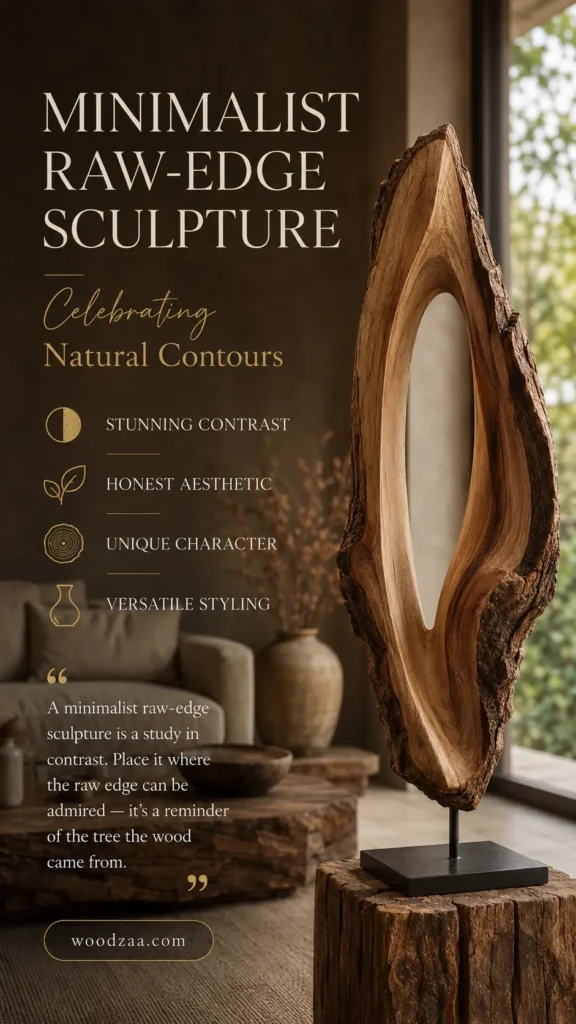
Minimalist raw-edge sculpture celebrates the natural contours of the wood. The raw edge – the natural, unworked surface of the tree – is preserved and celebrated, creating a striking contrast with the polished or carved interior.
Why raw-edge sculptures are so compelling:
- Stunning contrast: The raw edge against the finished surface creates visual drama
- Honest aesthetic: The piece celebrates the wood’s natural form
- Unique character: No two raw edges are alike
- Versatile styling: Works in contemporary, rustic, and transitional interiors
Ethan Stebbins, a Maine-based woodcrafter, uses instinctual techniques that embrace the natural edge and textures of the material, placing the unworked, raw material at the center of his designs. Nicholas Aylward juxtaposes the raw, natural finish of fallen timber with clean, geometric forms, exposing jagged timber edges while maintaining smooth, clean lines.
Worthy tip: “A minimalist raw-edge sculpture is a study in contrast. Place it where the raw edge can be admired – it’s a reminder of the tree the wood came from.”
5. Unfinished Wood Aesthetic Decor – Authentic and Grounded
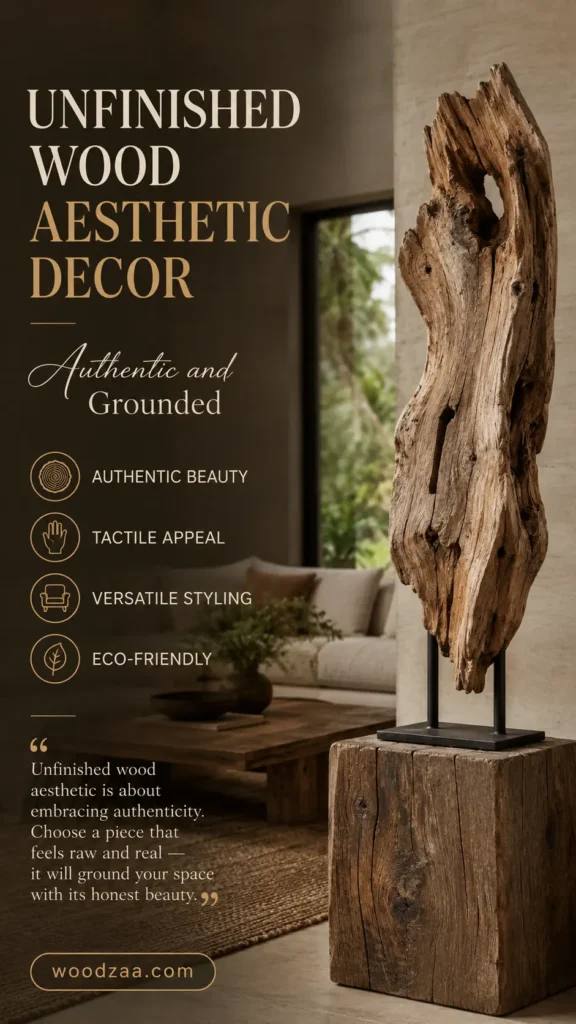
Unfinished wood aesthetic decor embraces the beauty of wood in its most natural state. No heavy varnishes, no artificial stains, no attempts to hide the wood’s true character. Just pure, honest timber – exactly as nature intended.
Why the unfinished wood aesthetic works:
- Authentic beauty: The wood’s natural character shines through
- Tactile appeal: The texture invites touch
- Versatile styling: Works in any interior style
- Eco-friendly: Minimal processing means minimal environmental impact
The beauty of unfinished wood lies in its honesty. Every knot, every grain pattern, every subtle variation in colour tells the story of the tree’s life. An unfinished piece is a celebration of that story.
Worthy tip: “Unfinished wood aesthetic is about embracing authenticity. Choose a piece that feels raw and real – it will ground your space with its honest beauty.”
6. Grain-Celebrating Sculptural Wood – Nature’s Artwork on Display
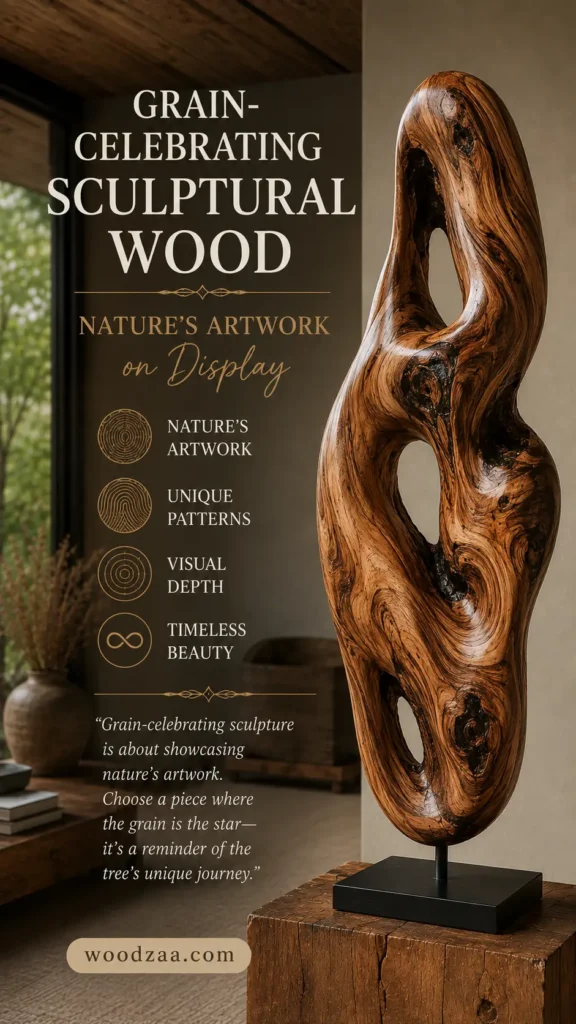
Grain-celebrating sculptural wood puts the wood’s natural grain patterns front and centre. The swirling patterns, the dramatic contrasts, the subtle variations – these are the true artwork, and the sculptor’s role is to showcase them.
Why grain-celebrating sculptures captivate:
- Nature’s artwork: The grain patterns are naturally beautiful
- Unique patterns: No two pieces of wood have the same grain
- Visual depth: The grain creates texture and interest
- Timeless beauty: Grain patterns never go out of style
Lutz Hornischer’s “9000 Years” sculpture celebrates the beautiful fine grain of old-growth redwood, with each piece showing about 100 growth rings – representing about 9000 years of tree growth. The “Abstract Wood Sculpture” by Logniture features a mesmerizing, swirling burl grain with dramatic, dark inclusions that flow across the forms, polished to an exceptionally smooth finish that gives the complex grain a liquid depth.
Worthy tip: “Grain-celebrating sculpture is about showcasing nature’s artwork. Choose a piece where the grain is the star – it’s a reminder of the tree’s unique journey.”
7. Imperfection-Accepting Wood Art – Embracing Flaws as Features
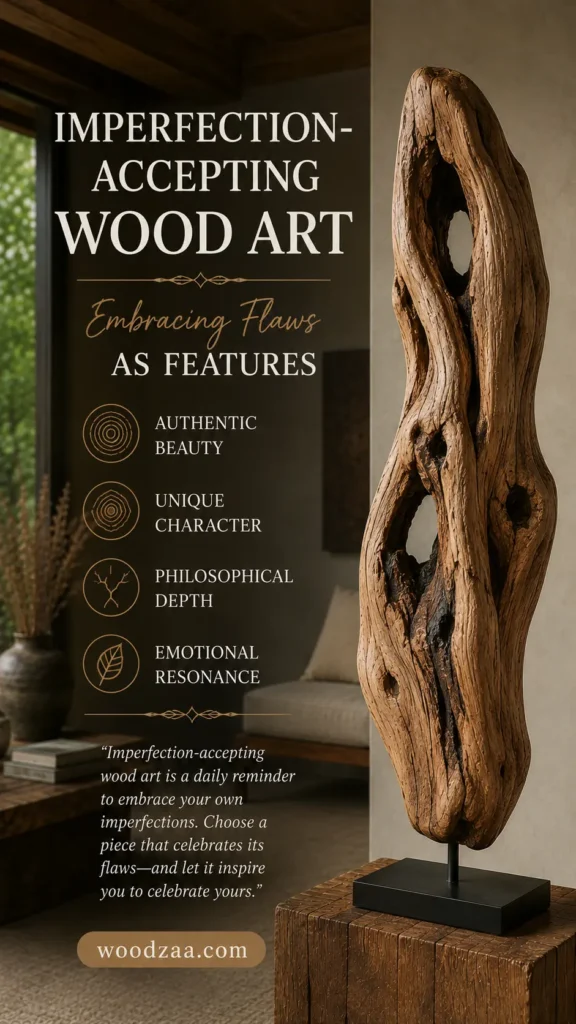
Imperfection-accepting wood art challenges our obsession with perfection. Cracks, knots, splits, and other “flaws” are not hidden or filled – they’re celebrated as part of the wood’s unique character.
Why imperfection-accepting art matters:
- Authentic beauty: The wood’s true character is revealed
- Unique character: The imperfections make each piece one of a kind
- Philosophical depth: The art challenges our notions of perfection
- Emotional resonance: The flaws connect us to the material’s story
The Japanese philosophy of wabi-sabi teaches us that “all things are impermanent, incomplete, and imperfect. Imperfection-accepting wood art embodies this philosophy, inviting us to find beauty in the cracks and knots that make each piece unique.
Worthy tip: “Imperfection-accepting wood art is a daily reminder to embrace your own imperfections. Choose a piece that celebrates its flaws – and let it inspire you to celebrate yours.”
8. Pure Organic Timber Forms – Connecting to the Earth
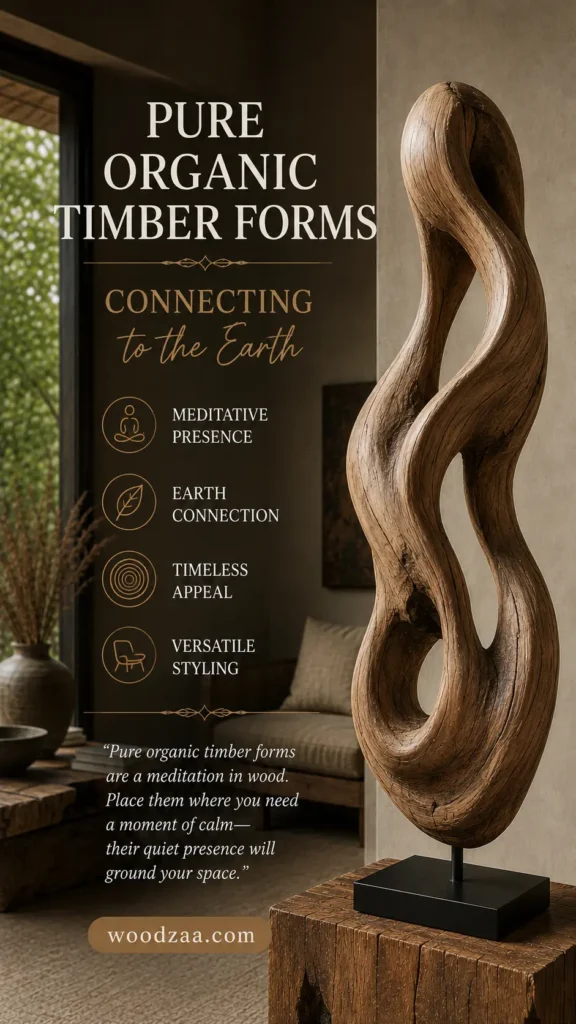
Pure organic timber forms strip away everything that isn’t essential, leaving only the pure, honest essence of the wood. These pieces are meditative, grounding, and deeply connected to the earth.
Why pure organic forms resonate:
- Meditative presence: The simple forms create a sense of calm
- Earth connection: The organic shapes connect us to nature
- Timeless appeal: Pure forms never go out of style
- Versatile styling: Works in any interior style
Yurii Andreichyn’s carved wooden wall sculptures emerge from raw matter – shaped by hand, guided by instinct, and marked by time. These works exist between sculpture and meditation – organic forms that radiate balance, calm, and spiritual depth.
Worthy tip: “Pure organic timber forms are a meditation in wood. Place them where you need a moment of calm – their quiet presence will ground your space.”
From Raw Timber to Living Art – Celebrating Wood’s True Beauty
You now have a complete guide to a timber sculpture that celebrates the raw beauty of wood. From the philosophical depth of wabi-sabi wood sculpture to the authenticity of organic natural timber art, from the honesty of honest material wood carving to the striking contrast of minimalist raw-edge sculpture, from the grounded appeal of unfinished wood aesthetic decor to the celebration of grain-celebrating sculptural wood, from the philosophical richness of imperfection-accepting wood art to the meditative presence of pure organic timber forms, and the timeless appeal of a rustic contemporary timber piece – you’re ready to bring the raw beauty of wood into your home.
These pieces are more than just decor. They’re a celebration of wood in its most honest, unfiltered state — a reminder that true beauty lies not in perfection, but in the cracks, the knots, and the unique character that make each piece of wood one of a kind.
Table of Contents
Call to Action (CTA)
Ready to bring a timber sculpture that celebrates raw beauty into your home? I’d love to help you find the perfect piece. Email me at admin@woodzaa.com with “Raw Beauty” in the subject line. Share your style – wabi-sabi, minimalist, organic, or something in between – and the feeling you want to create. I’ll help you find or commission a piece that celebrates the honest, unfiltered beauty of wood.
Let’s celebrate the raw beauty of timber.
– Sheila


Термоизоляция выполняет критическую роль в сохранении тепла внутри помещения.
Качественная теплоизоляция помогает существенно снизить расходы на обогрев и кондиционирование помещений.
https://rosmet-nn.ru/full/innovatsionnye-dobavki-v-kauchukovuyu-izolyatsiyu-povyshenie-ognestoykosti-i-antimikrobnykh-svoystv-1013/
Кроме того, утепление предотвращает образование влаги, плесени и промерзания конструкций.
Таким образом, правильная изоляция обеспечивает энергоэффективность и благоприятный климат в здании.