
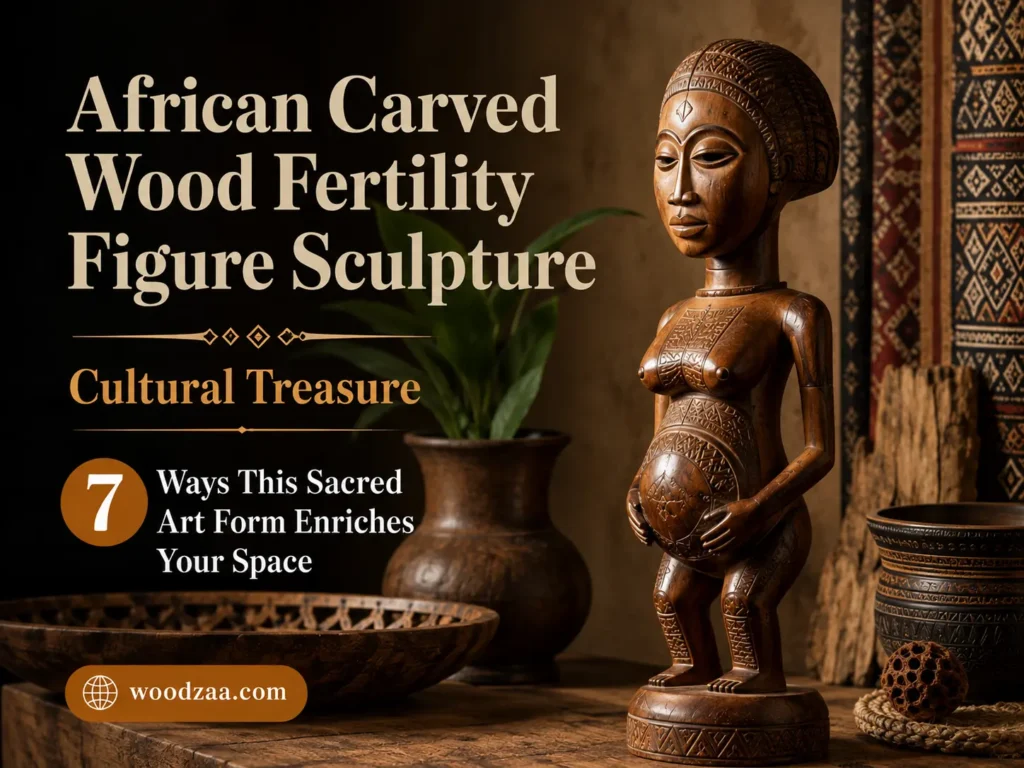
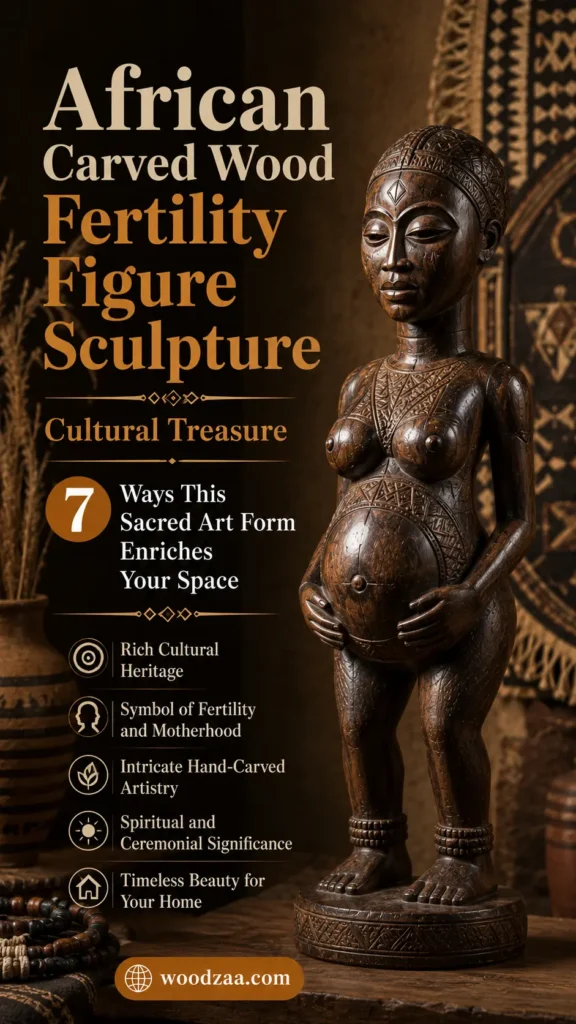
You’ve seen beautiful wooden sculptures from around the world, but few carry the profound cultural weight and spiritual meaning of African fertility figures. These aren’t just decorative objects – they’re vessels of prayer, symbols of hope, and expressions of a deep reverence for motherhood that spans generations.
An African carved wood fertility figure sculpture- a cultural treasure represents one of the most significant art forms on the continent. In this guide, you’ll discover the rich history, symbolism, and artistry behind these sacred sculptures, from the iconic Akan fertility figure sculpture to the powerful Baule mother and child statue, the spiritual Bamana fertility doll, and the protective Fanti fertility wood carving. You’ll learn how these pieces are used in rituals, the symbolism behind their distinctive forms, and how to appreciate them as both cultural treasures and stunning works of art.
1. The Akua’ba: Akan Fertility Figure Sculpture – The Most Recognizable African Fertility Art
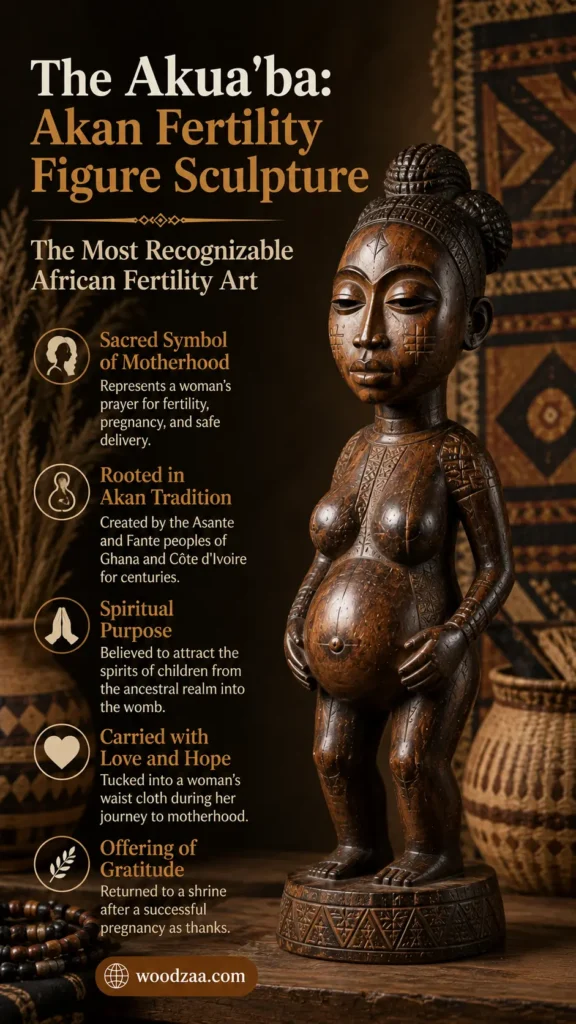
The Akan fertility figure sculpture known as the akua’ba (plural akua’ma) is perhaps the most recognizable form in African art. Created by the Asante and Fante peoples of what is now southern Ghana and Côte d’Ivoire, these figures have helped women seeking fertility and safe delivery for centuries.
The story behind the akua’ba: The name akua’ba literally means “Akua’s child”. According to Akan legend, a barren woman named Akua consulted a priest who instructed her to commission a small wooden figure and carry it as she would a real child. She did so, and in time she gave birth to a healthy daughter. From that moment, the practice spread among Akan-speaking communities. Among the Akan, children are understood to exist as spirits in asamando (the land of the ancestors) before they enter awiase (the physical world), and these figures help attract those spirits into the womb.
The akua’ba is carried by women who hope to conceive, tucked into the back of their waist cloth. These carved wooden figures embody Akan women’s prayers for motherhood. After a successful pregnancy, the figure may be returned to a shrine as an offering of gratitude.
Worthy tip: “An akua’ba fertility figure is a prayer made visible. Each carved line and symbolic detail represents a mother’s hope for a healthy child.”
For more on the cultural significance of African art, check out our related article: Metallic Snake Sculpture on Wood for Bold Interior Styling (Mid to High Net Worth)
2. Symbolism of the Akan Fertility Figure Sculpture – Wisdom, Beauty, and Prosperity
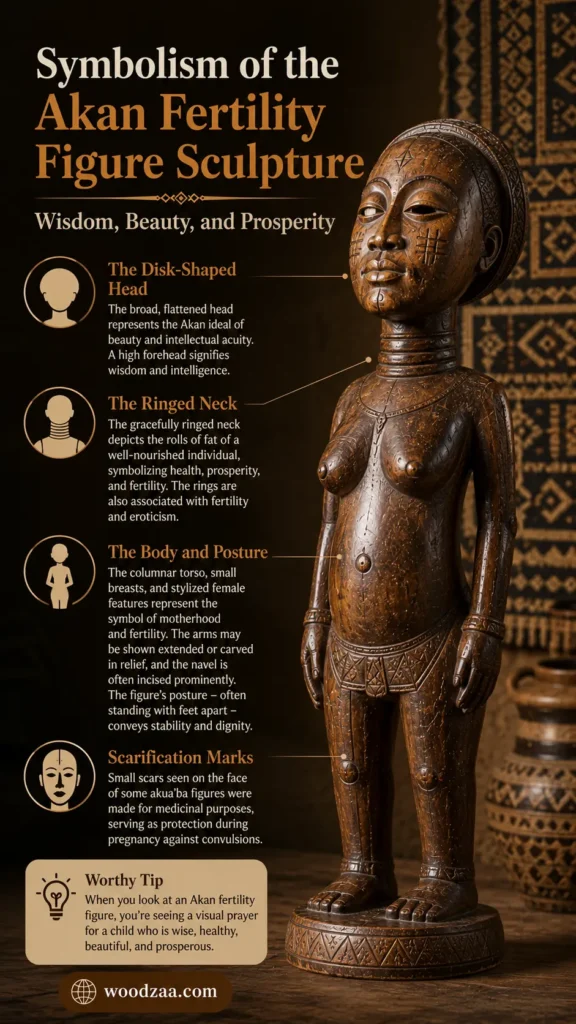
Every detail of the Akan fertility figure sculpture is laden with symbolism, reflecting the values and ideals of Akan culture.
The disk-shaped head: The broad, flattened head represents the Akan ideal of beauty and intellectual acuity. A high forehead signifies wisdom and intelligence. The head is slightly tilted back, suggesting poise and dignity.
The ringed neck: The gracefully ringed neck depicts the rolls of fat of a well-nourished individual, symbolizing health, prosperity, and fertility. The rings are also associated with fertility and eroticism.
The body and posture: The columnar torso, small breasts, and stylized female features represent the symbol of motherhood and fertility. The arms may be shown extended or carved in relief, and the navel is often incised prominently. The figure’s posture – often standing with feet apart – conveys stability and dignity.
Scarification marks: Small scars seen on the face of some akua’ba figures were made for medicinal purposes, serving as protection during pregnancy against convulsions.
Worthy tip: “When you look at an Akan fertility figure, you’re seeing a visual prayer for a child who is wise, healthy, beautiful, and prosperous.”
You Might Like : Metallic Snake Sculpture on Wood for Bold Interior Styling
3. Fanti Fertility Wood Carving – A Distinctive Akan Tradition
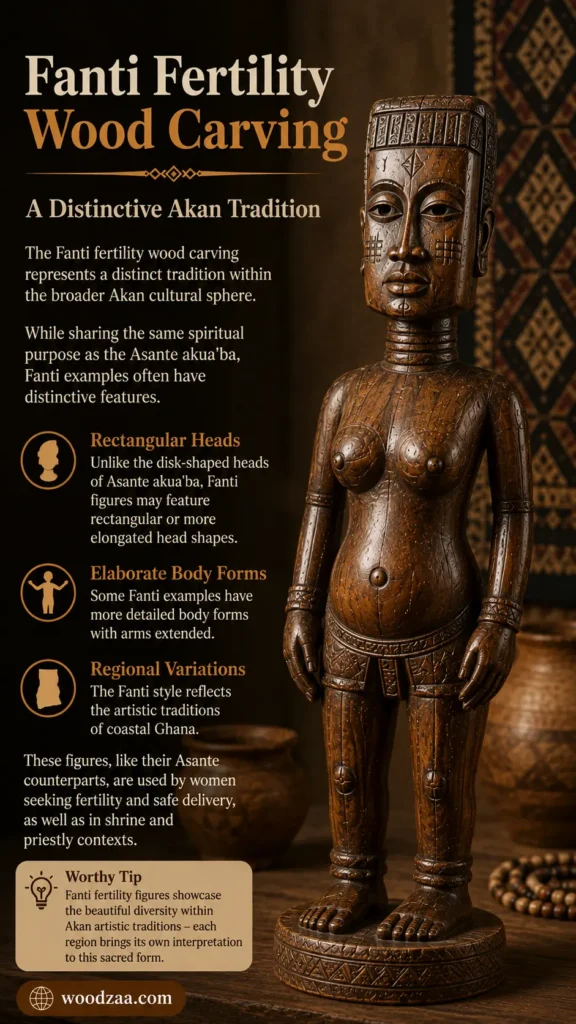
The Fanti fertility wood carving represents a distinct tradition within the broader Akan cultural sphere. While sharing the same spiritual purpose as the Asante akua’ba, Fanti examples often have distinctive features.
What makes Fanti fertility figures unique:
- Rectangular heads: Unlike the disk-shaped heads of Asante akua’ba, Fanti figures may feature rectangular or more elongated head shapes.
- Elaborate body forms: Some Fanti examples have more detailed body forms with arms extended.
- Regional variations: The Fanti style reflects the artistic traditions of coastal Ghana.
These figures, like their Asante counterparts, are used by women seeking fertility and safe delivery, as well as in shrine and priestly contexts.
Worthy tip: “Fanti fertility figures showcase the beautiful diversity within Akan artistic traditions – each region brings its own interpretation to this sacred form.”
4. Baule Mother and Child Statue – Fertility Talismans of Côte d’Ivoire
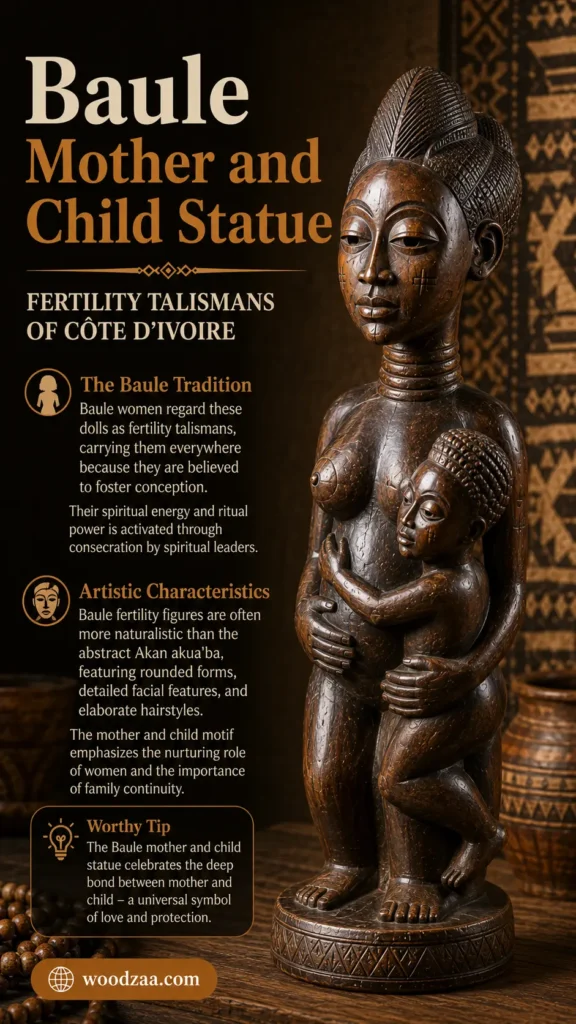
The Baule mother and child statue represents another significant tradition of West African fertility art. The Baule people of Côte d’Ivoire create these sculptures as powerful talismans for women hoping to conceive.
The Baule tradition: Baule women regard these dolls as fertility talismans, carrying them everywhere because they are believed to foster conception. The spiritual energy and ritual power of these figures is activated through consecration by spiritual leaders.
Artistic characteristics: Baule fertility figures are often more naturalistic than the abstract Akan akua’ba, featuring rounded forms, detailed facial features, and elaborate hairstyles. The mother and child motif emphasizes the nurturing role of women and the importance of family continuity.
Worthy tip: “The Baule mother and child statue celebrates the deep bond between mother and child – a universal symbol of love and protection.”
5. Bamana Fertility Doll (Mali) – Honoring the Heroic Mother
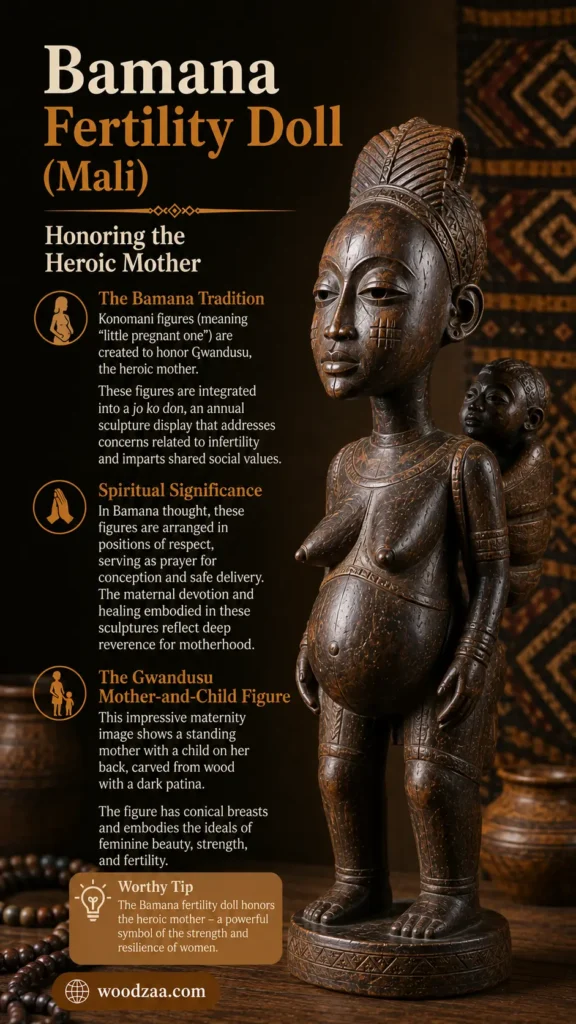
The Bamana fertility doll (Mali) represents a powerful tradition among the Bamana peoples of Mali. Known as Konomani (meaning “little pregnant one”), these figures are among an array of sculptures created to honor Gwandusu, the heroic mother.
The Bamana tradition: Konomani figures, with their pregnant bellies and full breasts, are integrated into a jo ko don, an annual sculpture display that addresses concerns related to infertility and imparts shared social values.
Spiritual significance: In Bamana thought, these figures are arranged in positions of respect, serving as prayer for conception and safe delivery. The maternal devotion and healing embodied in these sculptures reflect the deep reverence for motherhood in Bamana culture.
The Bamana Gwandusu mother-and-child figure: This impressive maternity image shows a standing mother with a child on her back, carved from wood with a dark patina. The figure has conical breasts and embodies the ideals of feminine beauty, strength, and fertility.
Worthy tip: “The Bamana fertility doll honors the heroic mother – a powerful symbol of the strength and resilience of women.”
6. Spiritual Energy and Ritual Power – The Sacred Purpose
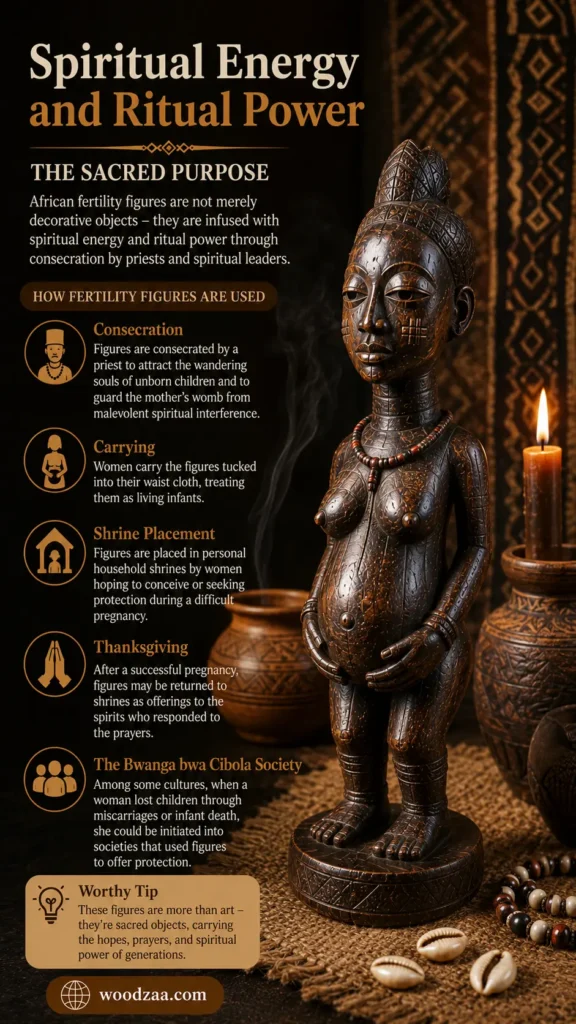
African fertility figures are not merely decorative objects – they are infused with spiritual energy and ritual power through consecration by priests and spiritual leaders.
How fertility figures are used:
- Consecration: Figures are consecrated by a priest to attract the wandering souls of unborn children and to guard the mother’s womb from malevolent spiritual interference.
- Carrying: Women carry the figures tucked into their waist cloth, treating them as living infants.
- Shrine placement: Figures are placed in personal household shrines by women hoping to conceive or seeking protection during a difficult pregnancy.
- Thanksgiving: After a successful pregnancy, figures may be returned to shrines as offerings to the spirits who responded to the prayers.
The Bwanga bwa Cibola society: Among some cultures, when a woman lost children through miscarriages or infant death, she could be initiated into societies that used figures to offer protection.
Worthy tip: “These figures are more than art – they’re sacred objects, carrying the hopes, prayers, and spiritual power of generations.”
7. The Akan Fertility Figure Sculpture in Contemporary Interiors
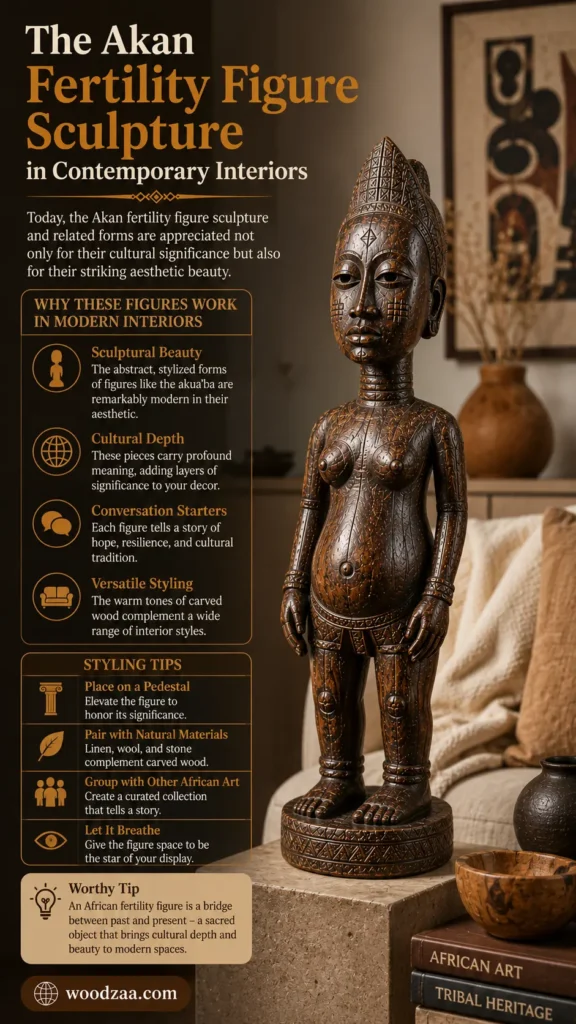
Today, the Akan fertility figure sculpture and related forms are appreciated not only for their cultural significance but also for their striking aesthetic beauty. Interior designers and collectors around the world are discovering the power of these pieces to bring warmth, meaning, and cultural depth to contemporary spaces.
Why these figures work in modern interiors:
- Sculptural beauty: The abstract, stylized forms of figures like the akua’ba are remarkably modern in their aesthetic.
- Cultural depth: These pieces carry profound meaning, adding layers of significance to your decor.
- Conversation starters: Each figure tells a story of hope, resilience, and cultural tradition.
- Versatile styling: The warm tones of carved wood complement a wide range of interior styles.
Styling tips:
- Place on a pedestal: Elevate the figure to honor its significance.
- Pair with natural materials: Linen, wool, and stone complement carved wood.
- Group with other African art: Create a curated collection.
- Let it breathe: Give the figure space to be the star of your display.
Worthy tip: “An African fertility figure is a bridge between past and present – a sacred object that brings cultural depth and beauty to modern spaces.”
Collecting African Carved Wood Fertility Figures
What to look for:
- Authenticity: Seek figures from reputable dealers who can provide provenance information.
- Material: Traditional figures are carved from wood, often with a dark patina from handling and ritual use.
- Condition: Look for well-preserved figures with intact details and signs of age.
- Provenance: Documentation of the figure’s origin and history adds value and meaning.
Respect and appreciation:
- Understand the cultural context: These figures are not mere “art” but sacred objects with deep spiritual significance.
- Honor the tradition: Appreciate the skill and cultural knowledge that went into creating each piece.
- Display with respect: Treat these figures with the dignity they deserve.
Worthy tip: “When you collect an African fertility figure, you’re not just acquiring art – you’re becoming a steward of cultural heritage.”
From Cultural Treasure to Personal Treasure
You now have a deeper understanding of the African carved wood fertility figure sculpture- a cultural treasure. From the iconic Akan fertility figure sculpture to the distinctive Fanti fertility wood carving, the nurturing Baule mother and child statue, the powerful Bamana fertility doll (Mali), and the sacred protection they offer during pregnancy, these figures represent some of the most significant and beautiful art forms in human history. Each piece tells a story of hope, resilience, and the universal human desire for family and connection.
Whether you’re a collector, an interior designer, or simply someone who appreciates the beauty of African art, these figures offer a way to connect with a rich cultural tradition that continues to inspire and move us today. They’re more than decorations – they’re prayers made visible, hope carved in wood, and a testament to the enduring power of the human spirit.
Table of Contents
Call to Action (CTA)
Ready to bring an African fertility figure sculpture into your collection? I’d love to help you find a piece that resonates with your spirit and honors this rich cultural tradition. Email me at admin@woodzaa.com with “African Fertility Figure” in the subject line. Share your style and the energy you want to bring into your space. I’ll help you find or commission a piece that celebrates the beauty, meaning, and cultural depth of these extraordinary treasures.
Let’s bring a cultural treasure into your home.
– Sheila

