
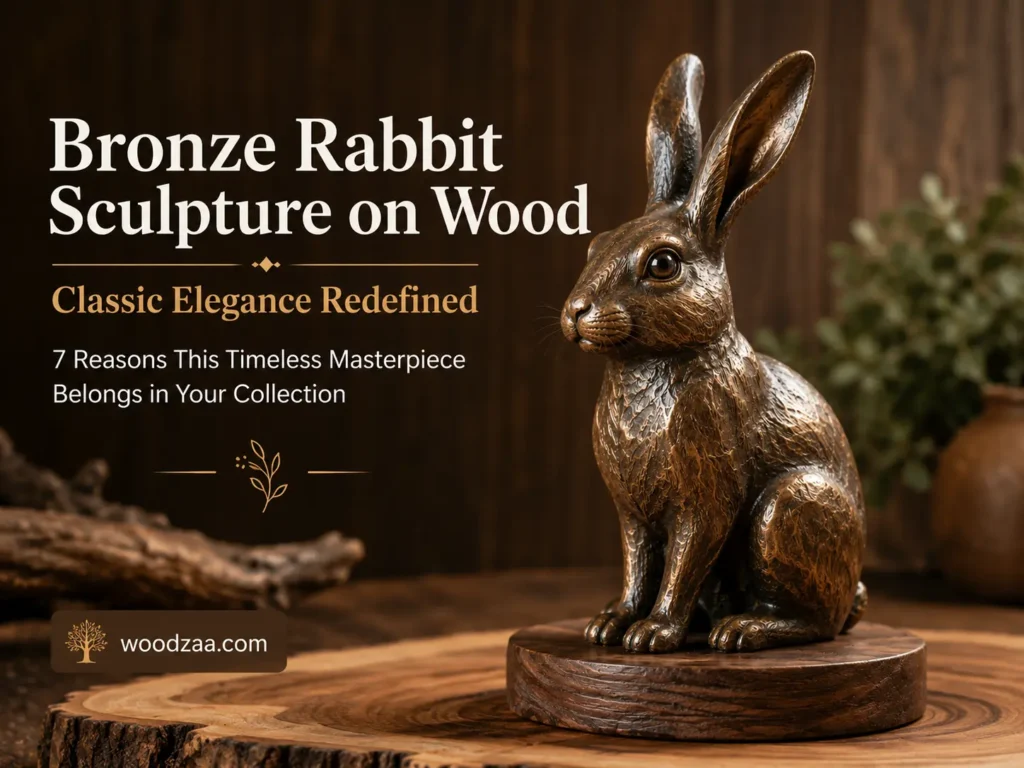
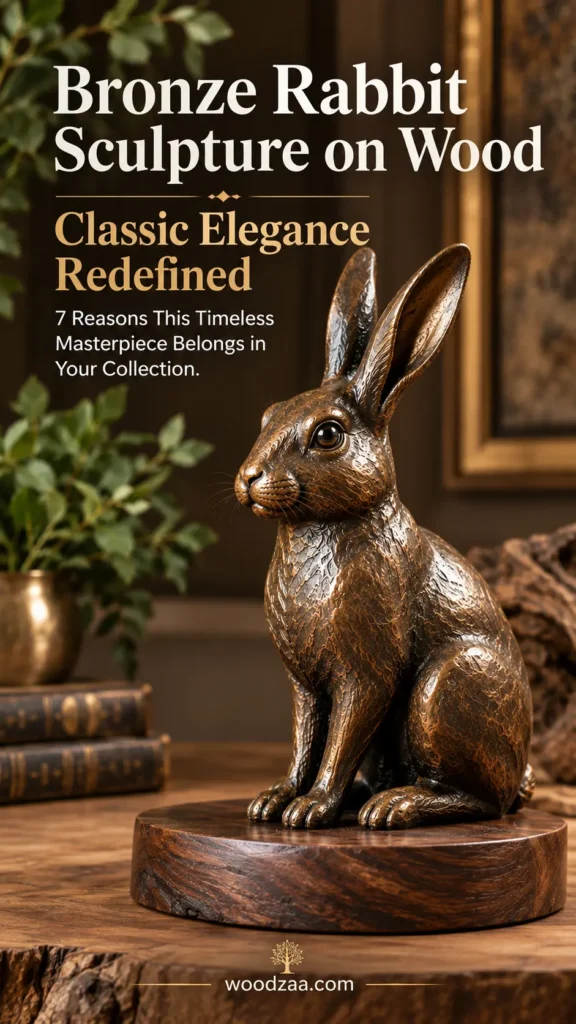
You’ve admired the quiet beauty of bronze sculpture – the way light plays across its surface, the depth of its patina, the sense of permanence it brings to any space. But have you ever encountered a bronze rabbit that seems to capture the very essence of grace and vitality, mounted on a warm wooden base that grounds it in nature? That’s the magic of a bronze rabbit sculpture on wood – classic elegance redefined.
In this guide, you’ll discover why these exquisite pieces have captivated collectors and designers for generations. You’ll explore the artistry behind the lost-wax bronze sculpture with timber mount, the rich beauty of a patinated bronze animal on walnut plinth, and the timeless appeal of a solid bronze hare on live-edge slab. You’ll learn about the masters who have shaped this tradition – from the renowned Japanese sculptor Saegusa Sōtarō (1911–2006), whose zodiac rabbit sculptures on black lacquered wooden bases are celebrated for their avant-garde silhouettes, to the French sculptor Andre Vincent Becquerel (1893–1981), whose vintage cast bronze running rabbits on wooden stands capture the energy and spirit of the animal.
You’ll also discover contemporary artists like Jürgen Lingl, who sculpts directly into wood with a chainsaw before casting some works in bronze, preserving the textures of the wood while lending them a timeless dimension. Whether you’re drawn to a leaping bronze rabbit sculpture, a sitting hare on a polished wood base, or a crouching hare bronze figure, each piece tells a story of craftsmanship, patience, and artistic vision.
1. The Lost-Wax Method: Ancient Craftsmanship, Timeless Beauty
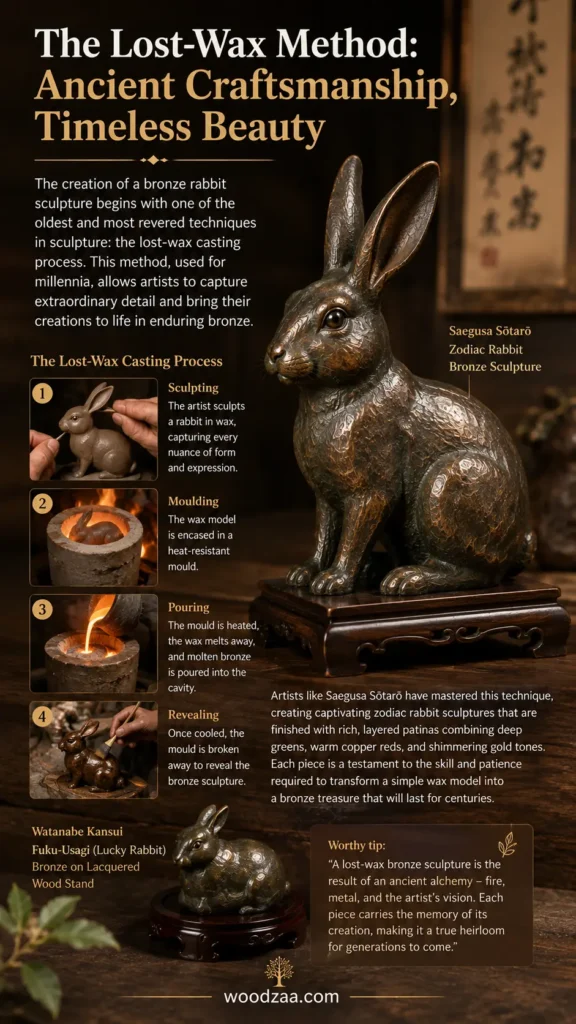
The creation of a bronze rabbit sculpture begins with one of the oldest and most revered techniques in sculpture: the lost-wax casting process. This method, used for millennia, allows artists to capture extraordinary detail and bring their creations to life in enduring bronze.
The process begins with the artist sculpting a rabbit in wax, capturing every nuance of form and expression. This original model is then encased in a heat-resistant mould. When the mould is heated, the wax melts away – hence the name “lost wax” – leaving a precise cavity. Molten bronze is then poured into this cavity, and once cooled, the mould is broken away to reveal the bronze sculpture.
Artists like the celebrated Japanese sculptor Saegusa Sōtarō have mastered this technique, creating captivating zodiac rabbit sculptures that are finished with rich, layered patinas combining deep greens, warm copper reds, and shimmering gold tones. Each piece is a testament to the skill and patience required to transform a simple wax model into a bronze treasure that will last for centuries. The process ensures that every sculpture, like those by Watanabe Kansui featuring the “Fuku-Usagi” (Lucky Rabbit) on a lacquered wood stand, is a unique work of art.
Worthy tip: “A lost-wax bronze sculpture is the result of an ancient alchemy – fire, metal, and the artist’s vision. Each piece carries the memory of its creation, making it a true heirloom for generations to come.”
2. The Art of Patina: How Bronze Tells Its Story
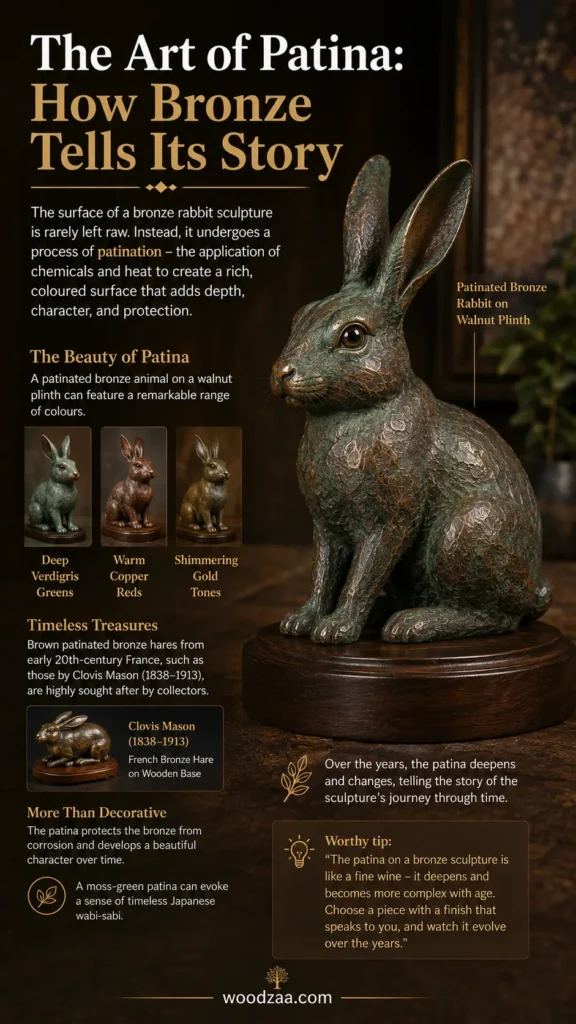
The surface of a bronze rabbit sculpture is rarely left raw. Instead, it undergoes a process of patination – the application of chemicals and heat to create a rich, coloured surface that adds depth, character, and protection.
A patinated bronze animal on a walnut plinth can feature a remarkable range of colours. The Japanese master Saegusa Sōtarō is known for finishes that combine “deep verdigris greens, warm copper reds, and shimmering gold tones, creating a uniquely luminous and textured appearance. Other pieces feature brown patinated bronze hares from early 20th-century France, such as those by Clovis Mason (1838–1913), whose works are signed and mounted on wooden bases.
The patina is not just decorative – it also protects the bronze from corrosion and develops a beautiful character over time. As one collector notes, a bronze rabbit with a moss-green patina can evoke “a sense of timeless Japanese wabi-sabi”. Over the years, the patina deepens and changes, telling the story of the sculpture’s journey through time.
Worthy tip: “The patina on a bronze sculpture is like a fine wine – it deepens and becomes more complex with age. Choose a piece with a finish that speaks to you, and watch it evolve over the years.”
You Might Like : Tiki Mask Wood Sculpture for Tropical-Inspired Décor
3. Wood and Bronze: The Perfect Partnership
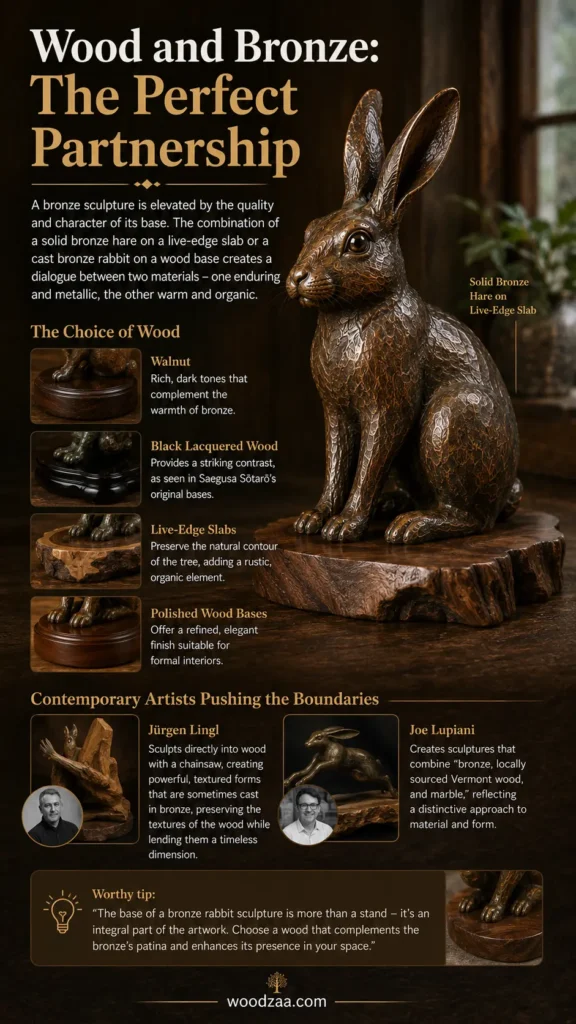
A bronze sculpture is elevated by the quality and character of its base. The combination of a solid bronze hare on a live-edge slab or a cast bronze rabbit on a wood base creates a dialogue between two materials – one enduring and metallic, the other warm and organic.
The choice of wood is crucial. Walnut offers a rich, dark tone that complements the warmth of bronze. Black lacquered wood provides a striking contrast, as seen in Saegusa Sōtarō’s original bases. Live-edge slabs – slices of wood that preserve the natural contour of the tree – add a rustic, organic element that grounds the sculpture in nature. Polished wood bases offer a refined, elegant finish suitable for formal interiors.
Some contemporary artists are taking this partnership to new levels. Jürgen Lingl sculpts directly into wood with a chainsaw, creating powerful, textured forms that are sometimes cast in bronze, “preserving the textures of the wood while lending them a timeless dimension. Joe Lupiani creates sculptures that combine “bronze, locally sourced Vermont wood, and marble,” reflecting a distinctive approach to material and form.
Worthy tip: “The base of a bronze rabbit sculpture is more than a stand – it’s an integral part of the artwork. Choose a wood that complements the bronze’s patina and enhances its presence in your space.”
4. Poses That Capture the Spirit of the Rabbit
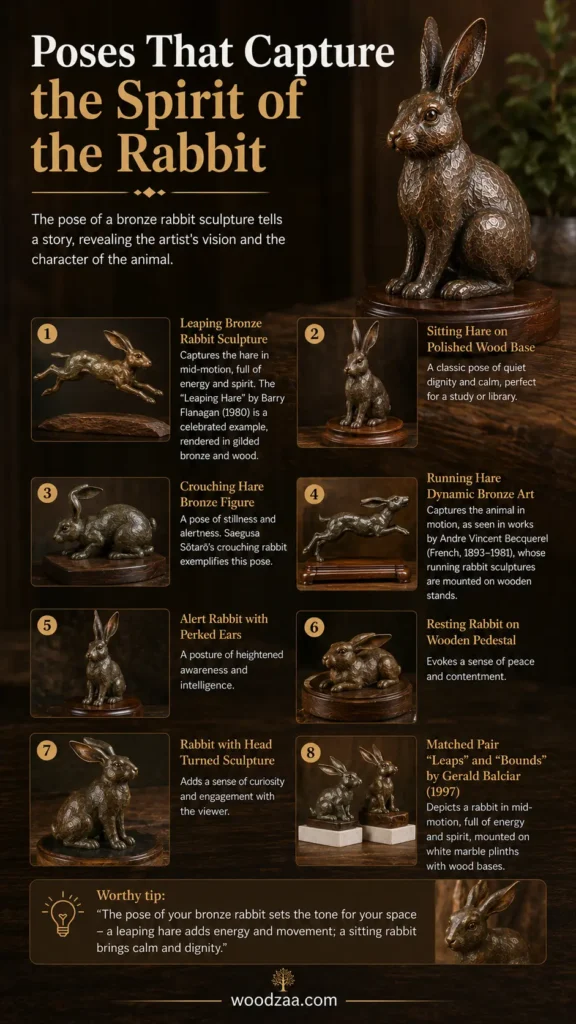
The pose of a bronze rabbit sculpture tells a story, revealing the artist’s vision and the character of the animal.
- Leaping bronze rabbit sculpture: Captures the hare in mid-motion, full of energy and spirit. The “Leaping Hare” by Barry Flanagan (1980) is a celebrated example, rendered in gilded bronze and wood.
- Sitting hare on polished wood base: A classic pose of quiet dignity and calm, perfect for a study or library.
- Crouching hare bronze figure: A pose of stillness and alertness. Saegusa Sōtarō’s crouching rabbit with tall, upright ears and a gently turned head exemplifies this pose.
- Running hare dynamic bronze art: Captures the animal in motion, as seen in works by Andre Vincent Becquerel (French, 1893–1981), whose running rabbit sculptures are mounted on wooden stands.
- Alert rabbit with perked ears: A posture of heightened awareness and intelligence.
- Resting rabbit on wooden pedestal: Evokes a sense of peace and contentment.
- Rabbit with head turned sculpture: Adds a sense of curiosity and engagement with the viewer.
The matched pair of bronze sculptures titled “Leaps” and “Bounds” by Gerald Balciar (1997) depicts “a rabbit in mid-motion, full of energy and spirit,” mounted on white marble plinths with wood bases.
Worthy tip: “The pose of your bronze rabbit sets the tone for your space – a leaping hare adds energy and movement; a sitting rabbit brings calm and dignity.”
5. Masters of the Medium: Artists Who Define the Genre
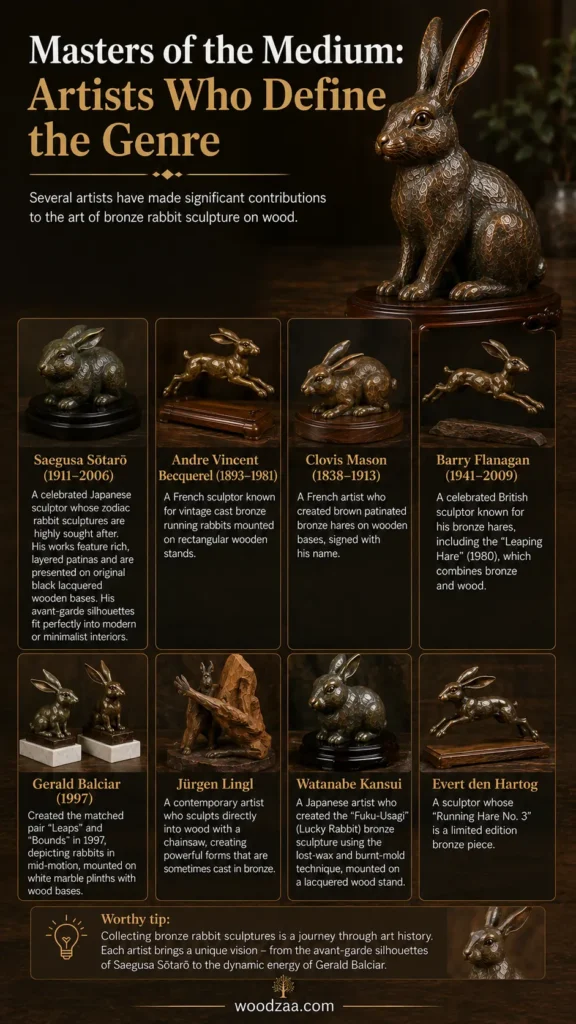
Several artists have made significant contributions to the art of bronze rabbit sculpture on wood.
Saegusa Sōtarō (1911–2006): A celebrated Japanese sculptor whose zodiac rabbit sculptures are highly sought after. His works feature rich, layered patinas and are presented on original black lacquered wooden bases. His avant-garde silhouettes fit perfectly into modern or minimalist interiors.
Andre Vincent Becquerel (1893–1981): A French sculptor known for vintage cast bronze running rabbits mounted on rectangular wooden stands.
Clovis Mason (1838–1913): A French artist who created brown patinated bronze hares on wooden bases, signed with his name.
Barry Flanagan (1941–2009): A celebrated British sculptor known for his bronze hares, including the “Leaping Hare” (1980), which combines bronze and wood.
Gerald Balciar: Created the matched pair “Leaps” and “Bounds” in 1997, depicting rabbits in mid-motion, mounted on white marble plinths with wood bases.
Jürgen Lingl: A contemporary artist who sculpts directly into wood with a chainsaw, creating powerful forms that are sometimes cast in bronze.
Watanabe Kansui: A Japanese artist who created the “Fuku-Usagi” (Lucky Rabbit) bronze sculpture using the lost-wax and burnt-mold technique, mounted on a lacquered wood stand.
Evert den Hartog: A sculptor whose “Running Hare No. 3” is a limited edition bronze piece.
Worthy tip: “Collecting bronze rabbit sculptures is a journey through art history. Each artist brings a unique vision – from the avant-garde silhouettes of Saegusa Sōtarō to the dynamic energy of Gerald Balciar.”
6. How to Choose the Perfect Bronze Rabbit for Your Space
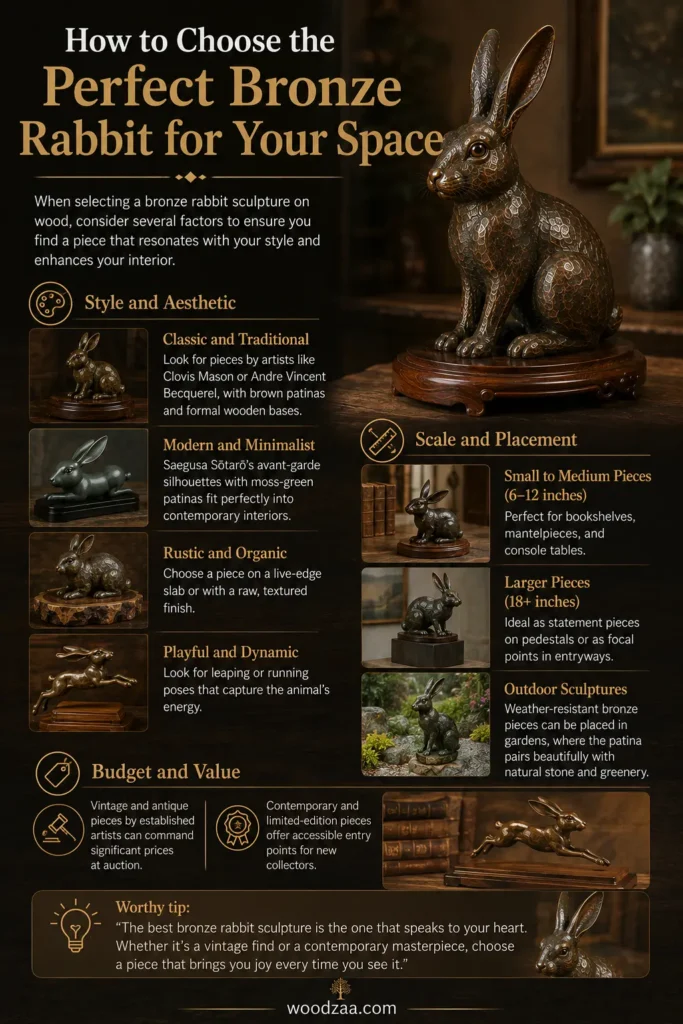
When selecting a bronze rabbit sculpture on wood, consider several factors to ensure you find a piece that resonates with your style and enhances your interior.
Style and aesthetic:
- Classic and traditional: Look for pieces by artists like Clovis Mason or Andre Vincent Becquerel, with brown patinas and formal wooden bases.
- Modern and minimalist: Saegusa Sōtarō’s avant-garde silhouettes with moss-green patinas fit perfectly into contemporary interiors.
- Rustic and organic: Choose a piece on a live-edge slab or with a raw, textured finish.
- Playful and dynamic: Look for leaping or running poses that capture the animal’s energy.
Scale and placement:
- Small to medium pieces (6–12 inches): Perfect for bookshelves, mantelpieces, and console tables.
- Larger pieces (18+ inches): Ideal as statement pieces on pedestals or as focal points in entryways.
- Outdoor sculptures: Weather-resistant bronze pieces can be placed in gardens, where the patina pairs beautifully with natural stone and greenery.
Budget and value:
- Vintage and antique pieces by established artists can command significant prices at auction.
- Contemporary and limited-edition pieces offer accessible entry points for new collectors.
Worthy tip: “The best bronze rabbit sculpture is the one that speaks to your heart. Whether it’s a vintage find or a contemporary masterpiece, choose a piece that brings you joy every time you see it.”
7. Styling Your Bronze Rabbit Sculpture for Maximum Impact
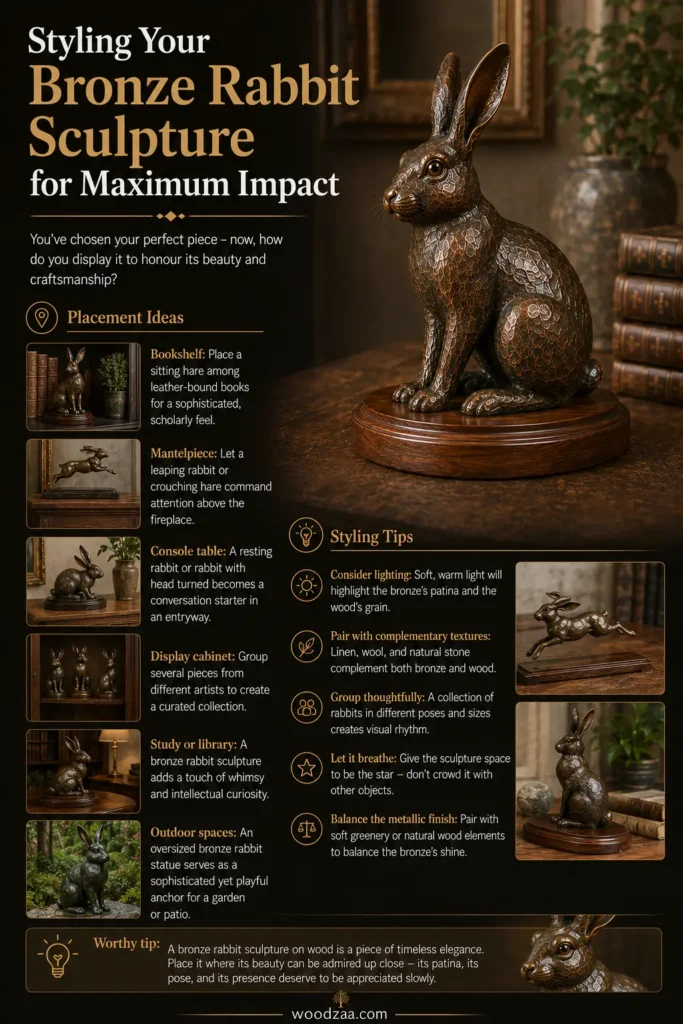
You’ve chosen your perfect piece – now, how do you display it to honour its beauty and craftsmanship?
Placement ideas:
- Bookshelf: Place a sitting hare among leather-bound books for a sophisticated, scholarly feel.
- Mantelpiece: Let a leaping rabbit or crouching hare command attention above the fireplace.
- Console table: A resting rabbit or rabbit with head turned becomes a conversation starter in an entryway.
- Display cabinet: Group several pieces from different artists to create a curated collection.
- Study or library: A bronze rabbit sculpture adds a touch of whimsy and intellectual curiosity.
- Outdoor spaces: An oversized bronze rabbit statue serves as a sophisticated yet playful anchor for a garden or patio.
Styling tips:
- Consider lighting: Soft, warm light will highlight the bronze’s patina and the wood’s grain.
- Pair with complementary textures: Linen, wool, and natural stone complement both bronze and wood.
- Group thoughtfully: A collection of rabbits in different poses and sizes creates visual rhythm.
- Let it breathe: Give the sculpture space to be the star – don’t crowd it with other objects.
- Balance the metallic finish: Pair with soft greenery or natural wood elements to balance the bronze’s shine.
Worthy tip: “A bronze rabbit sculpture on wood is a piece of timeless elegance. Place it where its beauty can be admired up close – its patina, its pose, and its presence deserve to be appreciated slowly.”
From Bronze to Treasure – Celebrating the Art of the Rabbit
You now have a complete guide to the bronze rabbit sculpture on wood – classic elegance redefined. From the ancient artistry of the lost-wax bronze sculpture with timber mount to the rich beauty of a patinated bronze animal on walnut plinth, from the natural harmony of a solid bronze hare on live-edge slab to the dynamic energy of a leaping bronze rabbit sculpture, from the quiet dignity of a sitting hare on polished wood base to the alert readiness of a crouching hare bronze figure – you’re ready to appreciate and collect these timeless treasures.
A bronze rabbit sculpture on wood is more than just a decorative object. It’s a piece of art history, a testament to the skill of generations of artisans, and a connection to the natural world. Whether you choose a vintage piece by a master like Saegusa Sōtarō or a contemporary creation by an artist like Jürgen Lingl, each sculpture carries a story waiting to be discovered and cherished.
Table of Contents
Call to Action (CTA)
Ready to find a bronze rabbit sculpture that redefines classic elegance for your home? I’d love to help you discover a piece that speaks to your heart. Email me at admin@woodzaa.com with “Bronze Rabbit” in the subject line. Tell me about your style – modern, traditional, rustic, or something in between – and the feeling you want to create. I’ll help you find or commission a piece that celebrates the beauty, craftsmanship, and timeless appeal of the bronze rabbit.
Let’s find your treasure.
– Sheila

