


Have you ever walked into a room and felt instantly moved by a sculpture? Not because it was big or expensive, but because it seemed to feel something – joy, sorrow, wonder. That’s no accident. Great wood artists embed emotion and narrative into every cut.
Today, I’m sharing wood artist secrets: carving sculptures that tell a story. You’ll learn how master carvers create wood sculptures with emotional expression, master carving characters that convey mood, master telling a story through body language in wood, hide hidden details in wood carving, and use unexpected wood joinery for dramatic effect.
Whether you’re curating for a client or commissioning your own piece, these insights will help you spot – and request – sculpture with soul.
1. Wood Sculptures with Emotional Expression: Beyond Beauty
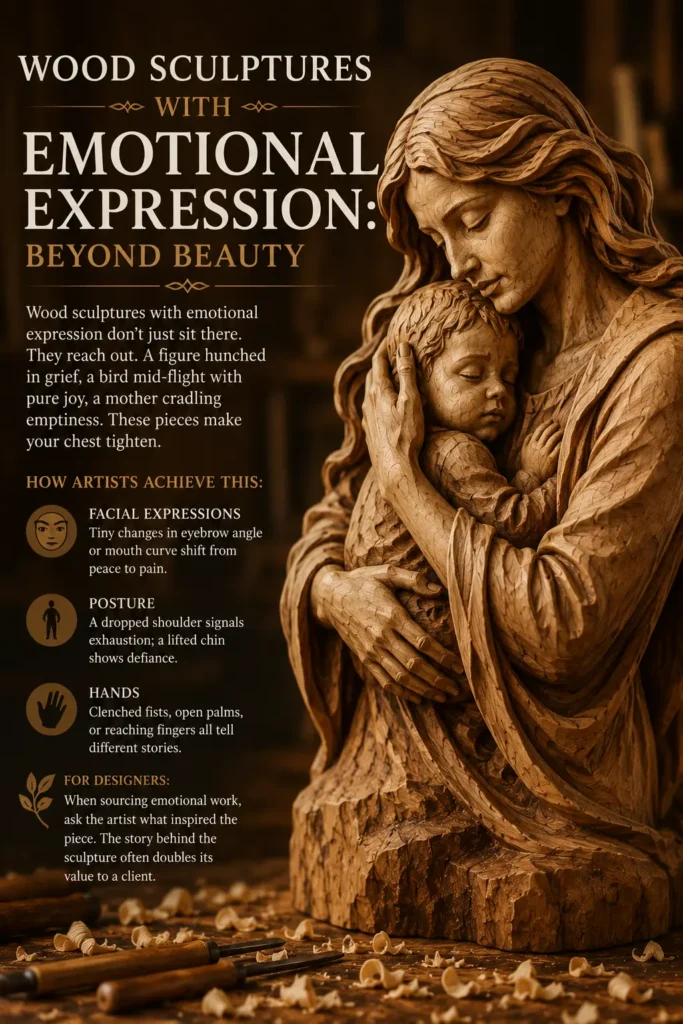
Wood sculptures with emotional expression don’t just sit there. They reach out. A figure hunched in grief, a bird mid‑flight with pure joy, a mother cradling emptiness. These pieces make your chest tighten.
How artists achieve this:
- Facial expressions – Tiny changes in eyebrow angle or mouth curve shift from peace to pain
- Posture – A dropped shoulder signals exhaustion; a lifted chin shows defiance
- Hands – Clenched fists, open palms, or reaching fingers all tell different stories
For designers: When sourcing emotional work, ask the artist what inspired the piece. The story behind the sculpture often doubles its value to a client.
Worthy tip: “Place an emotionally expressive sculpture where it catches morning light. The changing shadows will make the expression feel alive throughout the day.”
For more on the power of narrative wood art, check out our related article: Wood Artist Secrets: Carving Sculptures That Tell a Story (Mid to High Net Worth)
2. Carving Characters That Convey Mood: The Eyes Have It
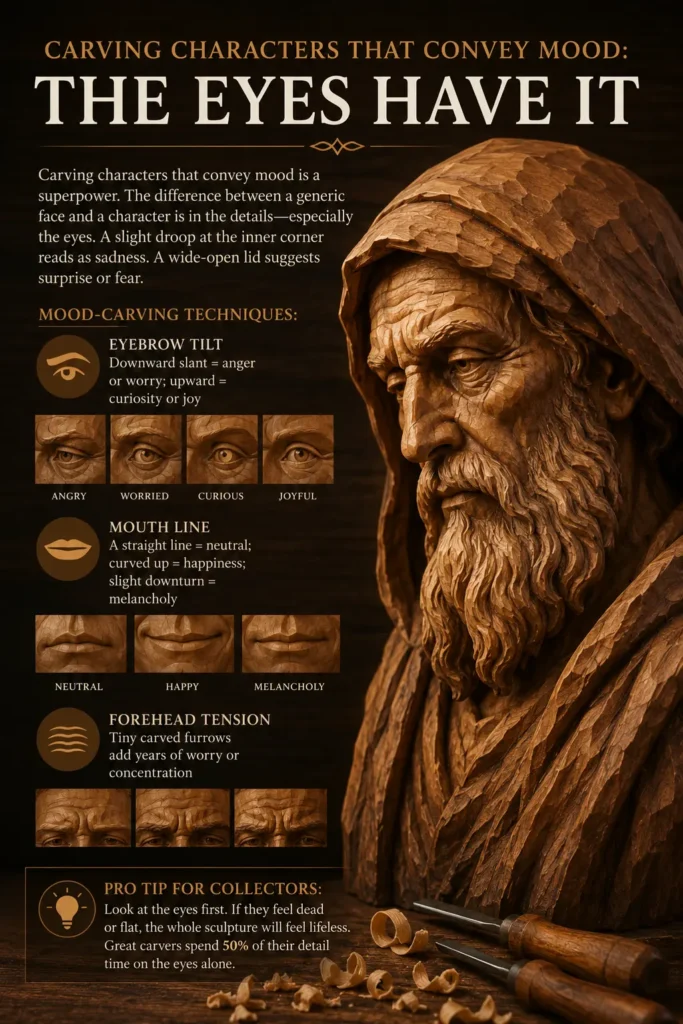
Carving characters that convey mood is a superpower. The difference between a generic face and a character is in the details – especially the eyes. A slight droop at the inner corner reads as sadness. A wide‑open lid suggests surprise or fear.
Mood‑carving techniques:
- Eyebrow tilt – Downward slant = anger or worry; upward = curiosity or joy
- Mouth line – A straight line = neutral; curved up = happiness; slight downturn = melancholy
- Forehead tension – Tiny carved furrows add years of worry or concentration
Pro tip for collectors: Look at the eyes first. If they feel dead or flat, the whole sculpture will feel lifeless. Great carvers spend 50% of their detail time on the eyes alone.
Worthy tip: “Ask the artist for a close‑up photo of the face before final sanding. You want to see crisp eye definition – not a smoothed‑over blob.”
3. Telling a Story Through Body Language in Wood
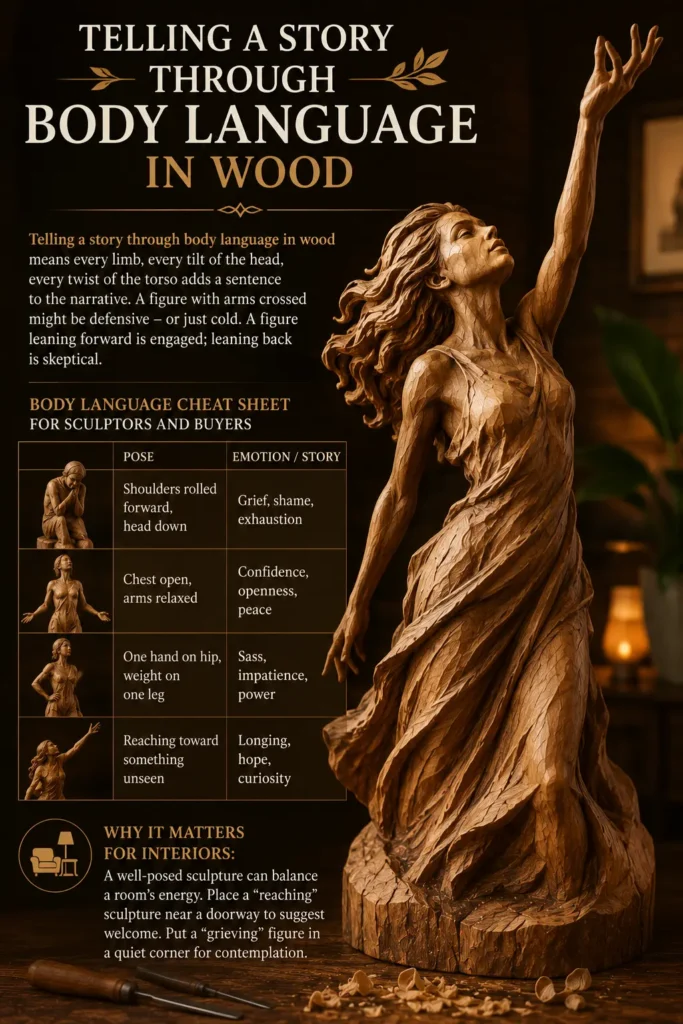
Telling a story through body language in wood means every limb, every tilt of the head, every twist of the torso adds a sentence to the narrative. A figure with arms crossed might be defensive – or just cold. A figure leaning forward is engaged; leaning back is skeptical.
Body language cheat sheet for sculptors and buyers:
| Pose | Emotion/Story |
|---|---|
| Shoulders rolled forward, head down | Grief, shame, exhaustion |
| Chest open, arms relaxed | Confidence, openness, peace |
| One hand on hip, weight on one leg | Sass, impatience, power |
| Reaching toward something unseen | Longing, hope, curiosity |
Why it matters for interiors: A well‑posed sculpture can balance a room’s energy. Place a “reaching” sculpture near a doorway to suggest welcome. Put a “grieving” figure in a quiet corner for contemplation.
Worthy tip: “When commissioning a narrative piece, send the artist photos of your client’s own body language. A custom pose that mirrors their natural stance feels uncannily personal.”
4. Hidden Details in Wood Carving: Discoveries Over Time
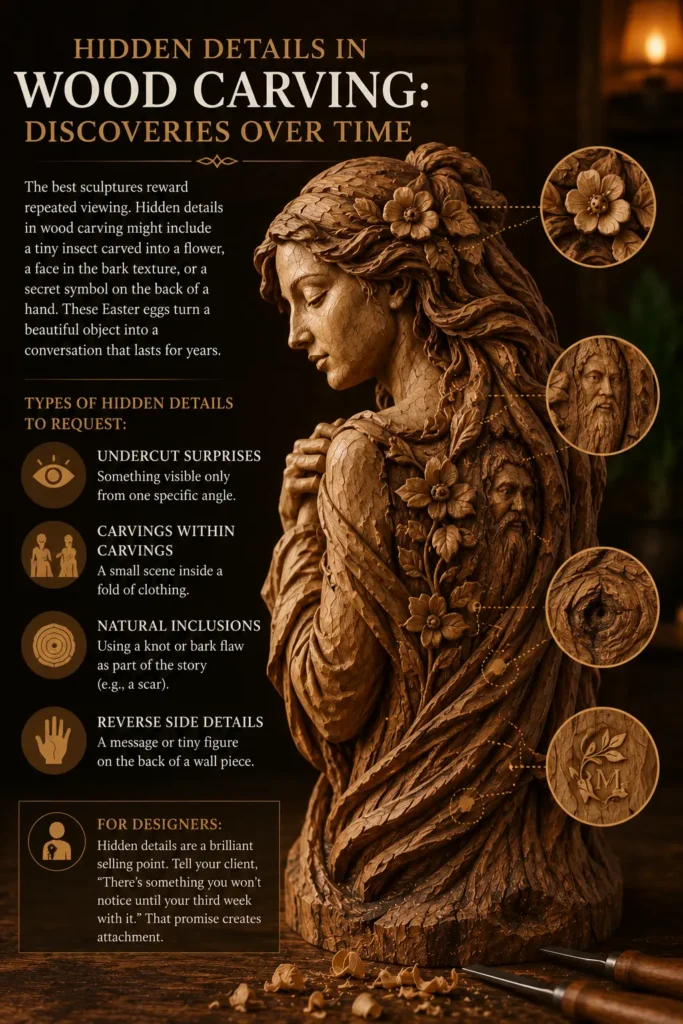
The best sculptures reward repeated viewing. Hidden details in wood carving might include a tiny insect carved into a flower, a face in the bark texture, or a secret symbol on the back of a hand. These Easter eggs turn a beautiful object into a conversation that lasts for years.
Types of hidden details to request:
- Undercut surprises – something visible only from one specific angle
- Carvings within carvings – a small scene inside a fold of clothing
- Natural inclusions – using a knot or bark flaw as part of the story (e.g., a scar)
- Reverse side details – a message or tiny figure on the back of a wall piece
For designers: Hidden details are a brilliant selling point. Tell your client, “There’s something you won’t notice until your third week with it.” That promise creates attachment.
Worthy tip: “Ask the artist to sign and date the sculpture in a hidden spot – under the base, inside a hollow, or carved into an unseen fold. It becomes a treasure hunt.”
5. Unexpected Wood Joinery for Dramatic Effect
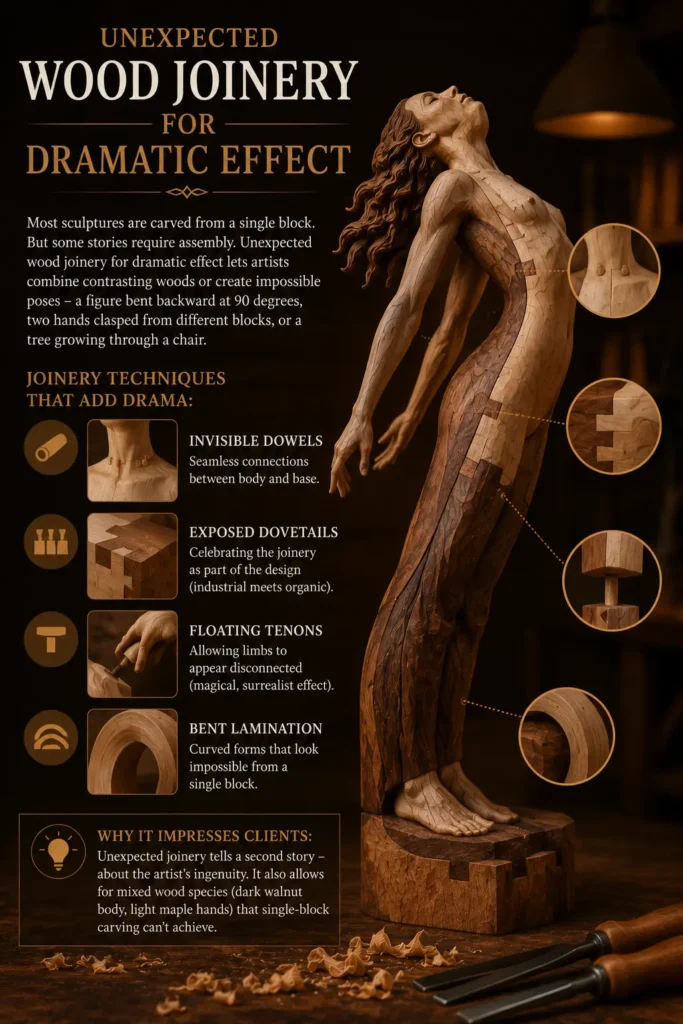
Most sculptures are carved from a single block. But some stories require assembly. Unexpected wood joinery for dramatic effect lets artists combine contrasting woods or create impossible poses – a figure bent backward at 90 degrees, two hands clasped from different blocks, or a tree growing through a chair.
Joinery techniques that add drama:
- Invisible dowels – Seamless connections between body and base
- Exposed dovetails – Celebrating the joinery as part of the design (industrial meets organic)
- Floating tenons – Allowing limbs to appear disconnected (magical, surrealist effect)
- Bent lamination – Curved forms that look impossible from a single block
Why it impresses clients: Unexpected joinery tells a second story – about the artist’s ingenuity. It also allows for mixed wood species (dark walnut body, light maple hands) that single‑block carving can’t achieve.
Worthy tip: “When displaying a sculptural piece with dramatic joinery, leave a gap between it and the wall. Shadows will fall through the connections, emphasizing the craft.”
6. How to Commission a Story‑Driven Wood Sculpture
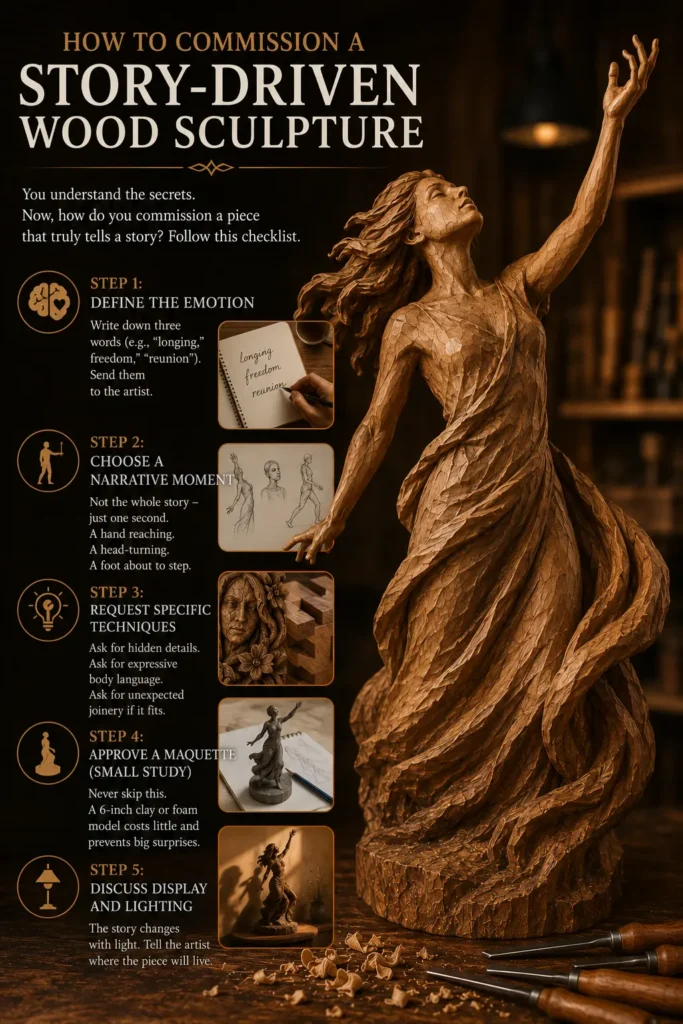
You understand the secrets. Now, how do you commission a piece that truly tells a story? Follow this checklist.
Step 1: Define the emotion
Write down three words (e.g., “longing,” “freedom,” “reunion”). Send them to the artist.
Step 2: Choose a narrative moment
Not the whole story – just one second. A hand reaching. A head-turning. A foot about to step.
Step 3: Request specific techniques
Ask for hidden details. Ask for expressive body language. Ask for unexpected joinery if it fits.
Step 4: Approve a maquette (small study)
Never skip this. A 6‑inch clay or foam model costs little and prevents big surprises.
Step 5: Discuss display and lighting
The story changes with light. Tell the artist where the piece will live.
Worthy tip: “Ask for in‑progress photos at three stages: rough block, detailed face, and final finish. Each photo tells its own mini‑story of the sculpture’s birth.”
7. Staging with Narrative Wood Sculptures: Room‑by‑Room Ideas
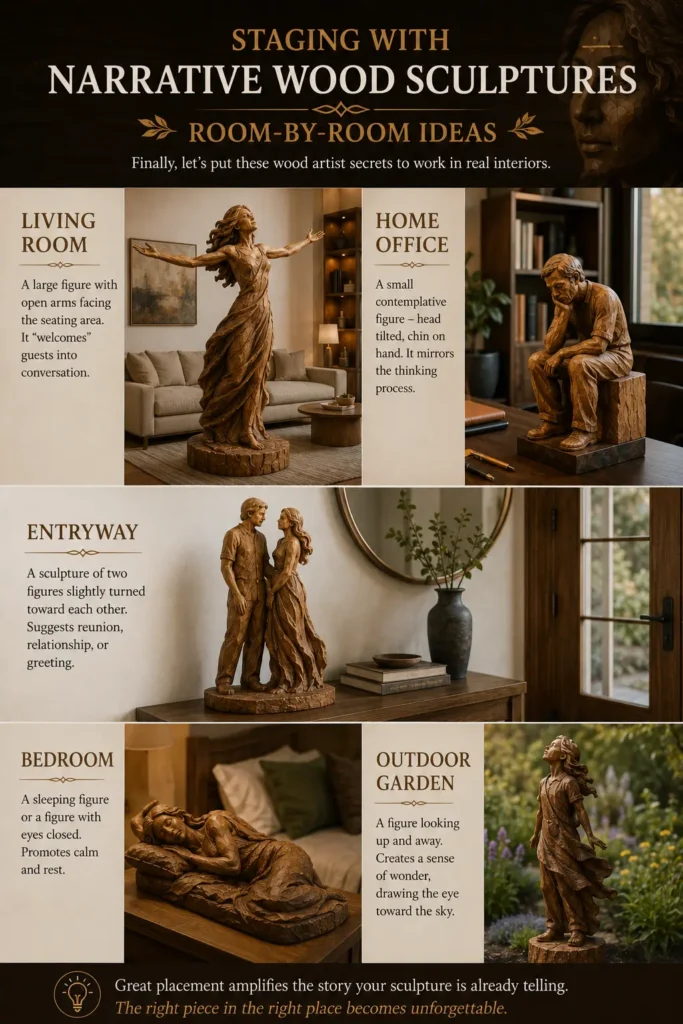
Finally, let’s put these wood artist secrets to work in real interiors.
Living room: A large figure with open arms facing the seating area. It “welcomes” guests into conversation.
Home office: A small contemplative figure – head tilted, chin on hand. It mirrors the thinking process.
Entryway: A sculpture of two figures slightly turned toward each other. Suggests reunion, relationship, or greeting.
Bedroom: A sleeping figure or a figure with eyes closed. Promotes calm and rest.
Outdoor garden: A figure looking up and away. Creates a sense of wonder, drawing the eye toward the sky.
Worthy tip: “Never place a sorrowful or aggressive sculpture in a room where people eat. Negative emotions and digestion don’t mix. Save those for hallways or studies.”
You Might Like : Do You Want Custom Wood Sculpture Click This…
From Secret to Statement
You now know the wood artist secrets: carving sculptures that tell a story – from wood sculptures with emotional expression and carving characters that convey mood to telling a story through body language, hidden details, and unexpected wood joinery.
The next time you see a wood sculpture that moves you, you’ll understand why. And when you commission one, you’ll speak the artist’s language – and get a piece that your clients will cherish for generations.
Table of Contents
Call to Action (CTA)
I’d love to hear the story you want to tell. Are you designing a space that needs a sculpture with heart? Send me an email at admin@woodzaa.com with three emotion words and a photo of the room. I’ll sketch a concept that brings those feelings to life – no charge for the first idea.
Let’s carve something unforgettable together.
– Sheila


Pingback: 9 Wood Carving Ideas for Beginners That Look Professional (No Experience Required) - Woodzaa